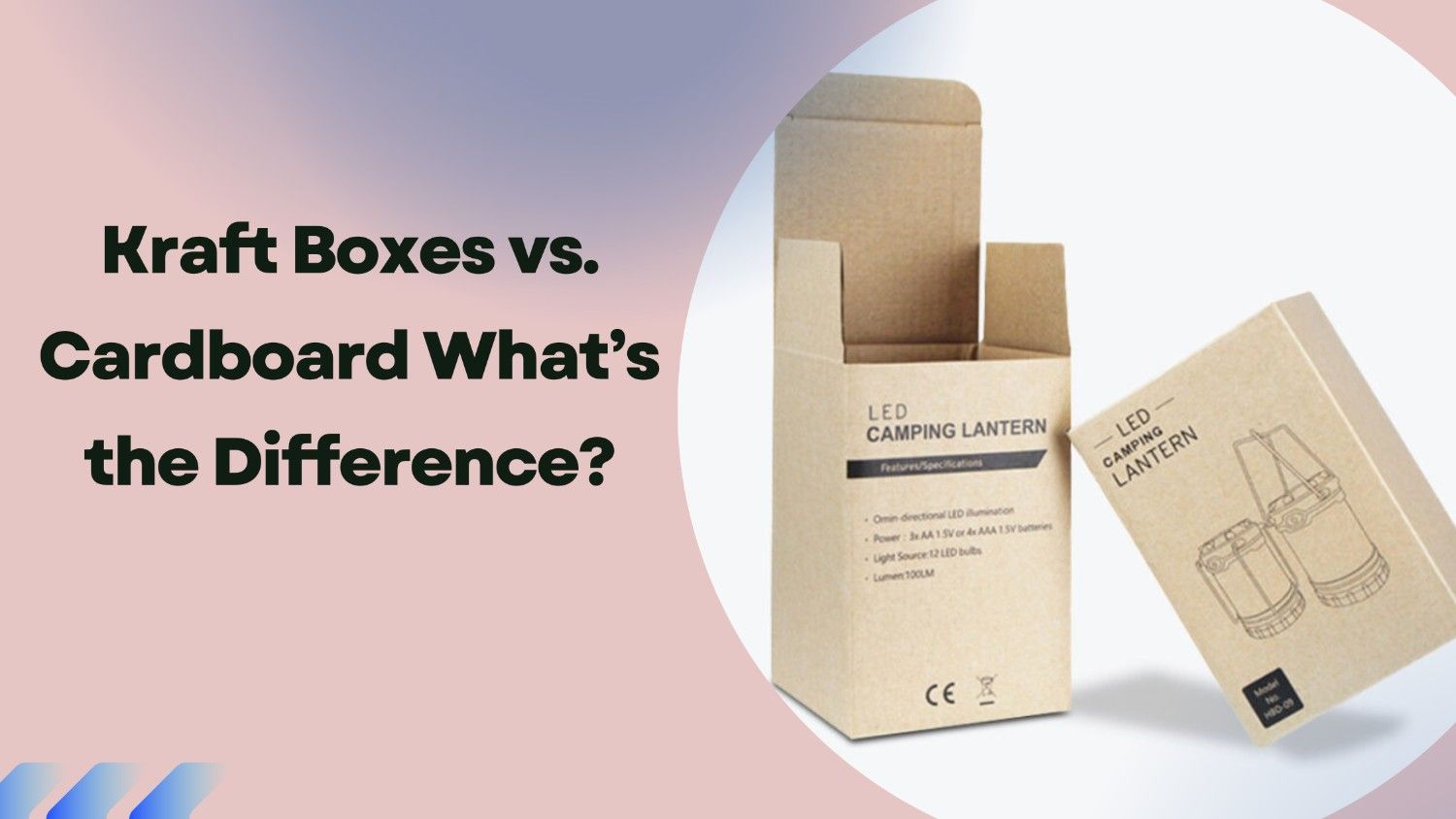
In today’s packaging world, brands often face a dilemma when choosing between Kraft boxes and cardboard boxes. Though both are popular materials used in packaging, they serve different purposes and come with unique benefits. Understanding the differences between these two types of packaging is essential—especially for eco-conscious brands, e-commerce businesses, and retailers seeking the perfect balance of sustainability, durability, and visual appeal.
In this blog, we’ll break down Kraft vs. cardboard in terms of their material makeup, eco-friendliness, strength, branding potential, and cost, helping you determine the right fit for your business.
What Are Kraft Boxes?
Kraft boxes with free shipping are made from unbleached pulp, typically derived from pine wood using the Kraft process—a chemical treatment that results in stronger, more durable fibers. These boxes have a natural brown color, though they can also be bleached white if needed.
One of the standout products in this category is the Kraft Gable Box, which is widely used for takeout packaging, small gifts, and eco-friendly product deliveries. Its built-in handle and rustic charm make it both practical and appealing to eco-conscious consumers.
What Are Cardboard Boxes?
Cardboard boxes, in contrast, are often used as a blanket term for many types of paper-based packaging, but typically refer to corrugated fiberboard boxes. These boxes are made of multiple layers: an inside liner, an outside liner, and a fluted (wavy) layer in the middle that provides cushioning and rigidity.
Cardboard packaging comes in various thicknesses and strengths, making it ideal for shipping, moving, and storing heavier products.
Key Differences Between Kraft Boxes and Cardboard
1. Material Strength and Durability
-
Kraft boxes are durable and resistant to tearing, but they are usually single-layered and not designed for heavy-duty shipping.
-
Cardboard boxes in USA, especially corrugated ones, are designed for strength. The multi-layer structure provides shock absorption and protection, making them suitable for fragile or heavy items.
Verdict: For product shipping or industrial use, cardboard is the stronger option. For lightweight and stylish packaging, Kraft wins.
2. Environmental Impact
-
Kraft boxes are often made from 100% recycled materials and are biodegradable. Because they are unbleached, they require less processing and fewer chemicals.
-
Cardboard boxes can also be made from recycled materials and are recyclable, but their production may involve more chemical treatment and energy use, especially if bleached or heavily printed.
Verdict: Kraft packaging is more eco-friendly, making it ideal for sustainable brands.
3. Printability and Branding
-
Kraft material’s natural surface is a bit more textured and porous, making it less ideal for full-color or glossy prints. However, it’s perfect for minimalist and rustic designs, often used with black ink or white foil stamping.
-
Cardboard offers a smooth surface for high-quality printing, lamination, embossing, and other branding finishes.
Verdict: For luxury branding or colorful retail displays, cardboard is better. For minimalist and organic branding, Kraft is a smarter choice.
4. Versatility and Design Options
-
Kraft boxes come in various shapes like pillow boxes, gable boxes, and folding cartons. They’re especially favored for gift packaging, food boxes, and eco-friendly cosmetics.
-
Cardboard boxes are more flexible in structure. They are the go-to for custom inserts, partitions, and larger box styles like mailer or shipping boxes.
Verdict: If your packaging requires more custom structure and protection, go with cardboard. For simple, charming packaging, Kraft is ideal.
5. Cost and Accessibility
-
Kraft packaging is generally less expensive, especially when uncoated and produced in bulk. It’s a cost-effective solution for startups and eco-conscious small businesses.
-
Cardboard may cost more depending on thickness, coatings, and printing techniques.
Verdict: For budget-friendly and sustainable packaging, Kraft is often the better deal.
Which Should You Choose for Your Brand?
Ultimately, the decision between Kraft boxes vs. cardboard depends on your product type, target audience, branding goals, and shipping needs.
Choose Kraft boxes if:
-
You sell lightweight items like cosmetics, organic products, candles, or gifts.
-
You aim to highlight your eco-friendly brand values.
-
You prefer rustic, minimalist packaging designs.
Choose cardboard boxes if:
-
You ship fragile, heavy, or high-value products.
-
You need high-end printing and elaborate branding.
-
You require structural flexibility like inserts or protective padding.
Final Thoughts
Both Kraft and cardboard boxes have their strengths. Brands that prioritize sustainability and minimalism may lean toward Kraft, while those needing durability and bold branding may opt for cardboard. By understanding their differences and use cases, you can make informed packaging decisions that align with your brand’s mission and customer expectations.