As the global demand for electrical appliances continues to grow, the need for reliable and safe home appliance testing equipment has become more critical than ever. Manufacturers must adhere to strict safety standards to ensure their products are not only functional but also safe for consumer use. One such essential standard in India is IS 302, which governs the safety of household and similar electrical appliances. This standard plays a central role in guiding manufacturers, test labs, and quality inspectors through the rigorous process of home appliance testing.
Home appliance testing IS 302 is not just a regulatory formality. It is a systematic and science-backed process that helps prevent accidents, build consumer trust, and reduce the risk of costly product recalls. With technological advancements influencing both appliance design and testing methodology, the relevance of robust testing procedures and well-calibrated equipment is more apparent than ever. The role of IS 302 extends beyond paperwork; it defines the backbone of safety for every household appliance sold in the Indian market.
IS 302 and Its Impact on Appliance Testing
The IS 302 standard is derived from the international IEC 60335 standard and has been adapted to suit Indian safety requirements. It covers general and particular requirements for the safety of household and similar electrical appliances. This section will break down the main components of the standard, explore its significance, and explain how it integrates with modern home appliance testing equipment and procedures.
Define Safety Objectives with IS 302 Compliance
IS 302 outlines the safety objectives that manufacturers must achieve before an appliance can be certified for use. These objectives include protection against electric shock, fire resistance, mechanical durability, and insulation integrity. The standard serves as a benchmark, ensuring that every appliance sold in the Indian market meets a minimum threshold of safety.
Adhering to home appliance testing IS 302 is not optional for manufacturers aiming to sell domestically. It is mandatory under the Bureau of Indian Standards (BIS) certification scheme. Appliances that fail to comply with these guidelines not only face regulatory action but also put consumers at serious risk. By following the IS 302 framework, manufacturers commit to upholding safety, which ultimately benefits the end-user.
Use Appropriate Home Appliance Testing Equipment
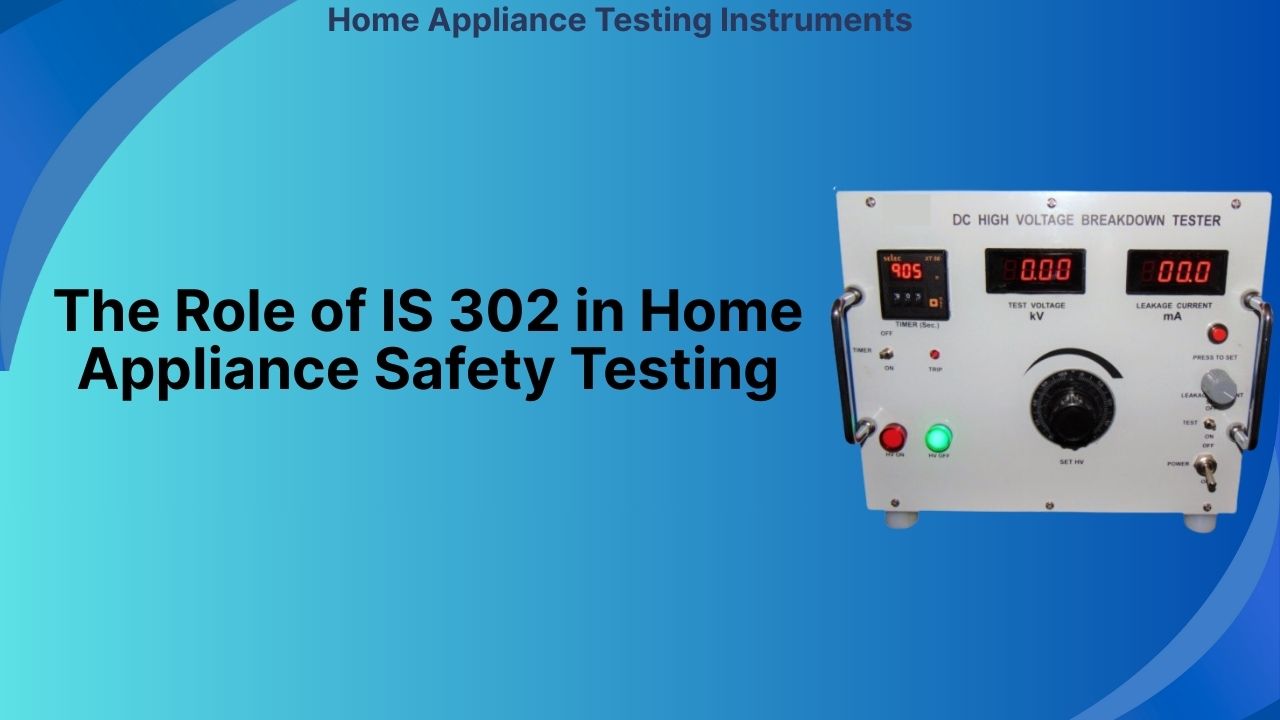
High-quality home appliance testing equipment is indispensable for evaluating compliance with IS 302. Each test prescribed under the standard requires specific instruments and setups, ranging from high-voltage testers and insulation resistance meters to temperature rise and leakage current testers.
The accuracy and reliability of these instruments directly affect the integrity of the test results. Poorly calibrated or outdated equipment can lead to false positives or undetected risks. Modern testing setups now include automated systems with digital reporting capabilities, reducing human error and increasing consistency in results. Investing in advanced equipment not only speeds up the testing process but also enhances the overall quality of safety assurance.
Implement Functional and Durability Testing Protocols
Apart from electrical safety, IS 302 also emphasizes the importance of functional and durability tests. Appliances are subjected to repeated cycles of operation to simulate real-world usage. This includes assessing moving parts, controls, and materials for wear and tear over time.
These tests help manufacturers evaluate how well an appliance can endure prolonged use without compromising safety. By simulating long-term usage conditions, manufacturers can identify and address potential failure points before the product hits the market. This approach reduces the likelihood of consumer complaints and returns, enhancing brand credibility.
Follow Specific Part Standards for Different Appliances
While home appliance testing IS 302 Part 1 outlines general safety requirements, subsequent parts are tailored to specific categories of home appliances, such as refrigerators, water heaters, and microwave ovens. Each of these parts includes detailed testing procedures relevant to the appliance’s intended use and potential hazards.
Manufacturers and test labs need to refer to the appropriate part standard during the testing process. Failure to apply the correct section can lead to incomplete assessments or non-compliance. Therefore, a comprehensive understanding of the IS 302 series is vital for both regulatory approval and product safety assurance.
Integrate Advanced Testing Solutions from Leading Brands
Toward the later stages of compliance, manufacturers often turn to industry-leading brands that specialize in home appliance testing IS 302 testing protocols. These providers offer integrated solutions that combine multiple testing functions into a single platform, making the testing process more efficient.
Advanced equipment from trusted sources also helps test labs maintain consistency across batches and devices. This consistency is crucial when applying for BIS certification or preparing products for export markets that recognize similar safety standards. Partnering with reliable testing equipment manufacturers ensures that the compliance process is not only accurate but also scalable.
Conclusion
The IS 302 standard forms the foundation of home appliance safety in India, providing a clear roadmap for manufacturers to follow in their testing and certification processes. By investing in accurate home appliance testing equipment and adhering to the prescribed testing protocols, manufacturers can significantly reduce the risks associated with electrical products. IS 302 is more than just a compliance hurdle; it is a safeguard for consumers and a tool for manufacturers to demonstrate their commitment to quality and safety.