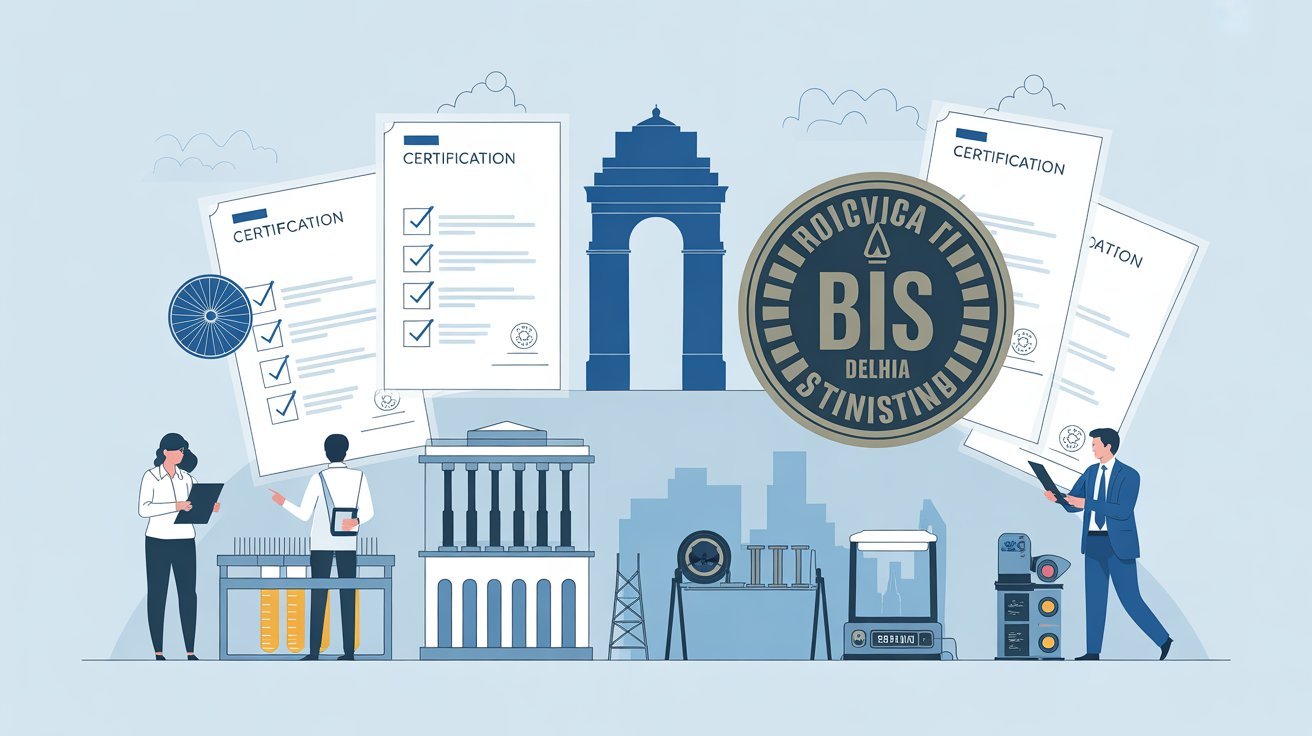
For manufacturers and importers planning to sell regulated products in India, obtaining BIS Certification in Delhi is a mandatory compliance requirement. The Bureau of Indian Standards (BIS), functioning under the Ministry of Consumer Affairs, is responsible for ensuring that products meet quality, safety, and reliability standards. Without certification, products listed under the compulsory registration scheme or mandatory list cannot be sold in the Indian market.
This article explains the BIS certification process in detail, including documents, fees, and timelines that businesses must know before applying.
What is BIS Certification?
BIS certification is an approval granted by the Bureau of Indian Standards, allowing manufacturers and importers to use the BIS Standard Mark on their products. It validates that the product complies with the relevant Indian Standard (IS). BIS approval covers a wide range of product categories, including electronics, household appliances, construction materials, and more.
Types of BIS Certification
- ISI Mark Certification: For domestic manufacturers producing goods as per Indian Standards.
- FMCS (Foreign Manufacturers Certification Scheme): For overseas manufacturers producing outside India but selling in the Indian market.
- CRS (Compulsory Registration Scheme): Mandatory for certain electronic & IT products.
Process of BIS Certification in Delhi
Step 1: Product Identification
Manufacturers or importers must first determine whether their product falls under the mandatory BIS certification list. Electronics, batteries, cables, lighting, and industrial equipment are some common categories.
Step 2: Product Testing
All products requiring BIS approval must be tested at BIS-recognized laboratories. The lab provides test reports confirming compliance with Indian Standards.
Step 3: Document Preparation
The application requires a comprehensive set of documents, including:
- Business registration certificate
- Product specifications & technical details
- Factory license (for manufacturers)
- Test reports from BIS-approved labs
- Brand or trademark certificate
- Import-export license (for importers)
- Authorization letter (if applicable)
Step 4: Application Filing
Applications are submitted online through the BIS portal. The applicant must upload documents, test reports, and pay the prescribed fees.
Step 5: Factory Inspection (if required)
For ISI and FMCS schemes, BIS officials may visit the manufacturing site to verify production facilities, quality control systems, and product consistency.
Step 6: Certification Grant
Upon successful review of reports and documents, BIS issues certification. Approved products can then display the BIS Standard Mark.
Fees for BIS Certification
The cost of certification depends on product category, testing charges, and BIS application fees. Typically, the cost includes:
- Application processing fee
- Product testing charges (varies by product type)
- Annual license fee
- Marking fee for using the BIS Standard Mark
Businesses should budget for both one-time and recurring fees associated with maintaining certification.
Timeline for BIS Certification
The approval timeline varies depending on the type of certification:
- ISI Mark Certification: Around 60–90 days (includes testing & inspection)
- FMCS Certification: 6–8 months (due to overseas factory inspection)
- CRS Registration: 4–6 weeks (if documentation & testing are complete)
Delays usually occur due to incomplete documentation, incorrect test reports, or communication gaps with authorities.
Benefits of BIS Certification
- Legal compliance for selling products in India
- Smooth customs clearance for imports
- Improved consumer trust & brand reputation
- Access to larger retail & distribution networks
- Competitive advantage over non-certified products
Common Challenges in BIS Certification
- Submitting incomplete or outdated documents
- Delays in laboratory testing
- Misunderstanding the product category under certification schemes
- Errors in labeling guidelines for BIS Standard Mark
How Om Garuda Group Helps
Managing BIS certification involves technical knowledge, accurate documentation, and coordination with authorities. Om Garuda Group assists businesses in every step, including product testing, preparing documents, filing applications, and ensuring timely approvals. Their expertise helps manufacturers & importers avoid mistakes and achieve compliance faster.
Conclusion
BIS certification is a crucial step for manufacturers and importers planning to sell regulated products in India. From product testing and documentation to fees and approval timelines, every stage must be handled carefully to avoid delays. With the right guidance, businesses can ensure smooth approvals and maintain long-term compliance. For efficient application management and expert support, securing BIS Registration in Delhi through professional consultants is the best path for compliance and market success.