Introduction: The Policy Shift Toward Digital Fisheries
Illegal, unreported, and unregulated (IUU) fishing remains one of the most serious threats to marine biodiversity and the global seafood economy. According to the FAO, IUU fishing accounts for up to 26 million tons of fish each year, representing one in every five fish caught worldwide. The financial losses exceed $23 billion annually, affecting both coastal livelihoods and food security.
As governments and regulators intensify their commitment to sustainable ocean governance, fisheries software has emerged as a digital platform—integrating data collection, electronic monitoring, and supply-chain tracking—form the backbone of transparent, compliant, and resilient fisheries management systems.
What Is Fisheries Software and Why It Matters
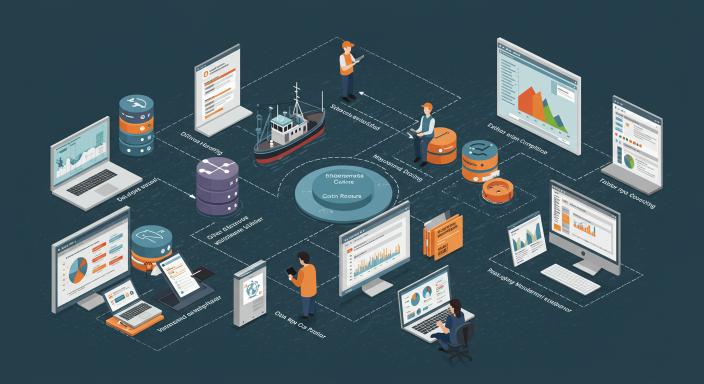
Fisheries software refers to a suite of digital tools designed to manage, monitor, and regulate fishing activities across both capture and aquaculture sectors. From vessel monitoring systems (VMS) and electronic catch documentation to blockchain-based traceability and analytics dashboards, these platforms offer decision-makers real-time insight into marine resource use.
Key functionalities include:
- Catch Documentation & Verification: Digital reporting replaces paper logs, minimizing fraud.
- Supply-Chain Traceability: Data from each harvest event connects directly to processing and export records.
- Regulatory Compliance: Automated validation ensures adherence to national and international laws.
- Performance Analytics: Dashboards visualize stock trends, vessel behavior, and fishing effort distribution.
By bridging science, policy, and commerce, these tools transform static reporting systems into dynamic intelligence networks.
Policy Challenge #1: Combating IUU Fishing
IUU fishing undermines sustainability, distorts markets, and erodes trust in seafood certification. Enforcement agencies often struggle with incomplete data and fragmented reporting. Fisheries software addresses these gaps by digitizing the entire compliance process:
- Electronic Logbooks (e-Logs): Vessels submit real-time data on species caught, location, and gear used.
- Integrated Vessel Monitoring: GPS-linked systems detect suspicious patterns—such as fishing in restricted zones.
- Data-Driven Enforcement: Analytics modules flag anomalies for investigation, prioritizing patrol resources.
For instance, Indonesia’s One Data Fisheries Program unified 13 government datasets using cloud-based monitoring tools. Within two years, detection of unreported fishing activity increased by 34 %, enabling faster interventions and policy responses.
Policy Challenge #2: Traceability & Supply-Chain Transparency
Consumers, retailers, and regulators increasingly demand visibility into where seafood comes from and how it’s handled. Supply chains often cross multiple borders, making traceability difficult without robust digital infrastructure.
- End-to-End Product Tracking: Each batch of fish is assigned a digital ID linked to catch certificates and export documentation.
- Blockchain Integration: Immutable records prevent tampering and strengthen trust among trading partners.
- Interoperability with Global Platforms: APIs connect with systems like the EU’s Catch Certification Scheme and the U.S. Seafood Import Monitoring Program (SIMP).
A 2023 World Bank review found that implementing electronic traceability reduced documentation errors by over 60 % in pilot countries such as Vietnam and Ghana.
Policy Challenge #3: Data Silos & Fragmented Governance
Fisheries data often reside in isolated systems—research institutions, ministries, and private enterprises operate separately. As a result, policy design lacks real-time intelligence.
Modern fisheries software solutions solve this fragmentation through integrated databases and cloud-based collaboration. Unified data architecture ensures that environmental monitoring, quota allocation, and trade compliance all reference the same verified datasets.
For example, Norway’s “Digital Fisheries Platform” connects satellite, sensor, and sales-record data streams into one centralized dashboard. Policymakers can view catch volumes, vessel activity, and carbon footprints simultaneously—enabling evidence-based decisions aligned with sustainability targets.
Key Technological Enablers Behind Fisheries Software
- Artificial Intelligence (AI) & Machine Learning:
Algorithms analyze satellite imagery and catch reports to detect illegal operations automatically. - Internet of Things (IoT):
Networked buoys, sensors, and tags transmit environmental and biological data from fishing zones to centralized systems. - Blockchain Technology:
Provides immutable transaction records, ensuring supply-chain transparency and preventing document forgery. - Mobile & Offline Data Collection:
Portable devices allow small-scale fishers in remote areas to report catches even without continuous internet access.
These innovations make digital governance accessible, scalable, and adaptive across both developed and emerging fisheries.
Economic & Environmental Payoffs of Digital Transformation
Implementing fisheries software isn’t just about compliance—it’s an investment in efficiency and sustainability.
- Reduced Administrative Overhead: Electronic systems cut manual paperwork by up to 70 %, freeing staff for field enforcement and research.
- Improved Resource Allocation: Real-time monitoring allows adaptive quota management, minimizing overfishing risks.
- Market Access Benefits: Digitally verifiable documentation is increasingly required by export markets.
- Ecosystem Protection: Data-driven zoning helps enforce marine protected areas (MPAs) and seasonal bans.
A 2022 FAO evaluation found that nations using digital monitoring frameworks experienced an average 25 % reduction in IUU incidents within three years of implementation.
Case Study: The Philippines’ National e-CDT System
The Philippines, home to one of the world’s largest archipelagic fishing zones, launched its electronic Catch Documentation and Traceability (e-CDT) platform in partnership with USAID.
Using advanced fisheries software, the system captures data from vessel registration, landing declarations, and export documentation. All entries are validated automatically, ensuring compliance with national fisheries law and global trade regulations.
Key results include:
- 98 % compliance rate among commercial tuna vessels
- 50 % faster export processing times
- Enhanced reputation for transparency in EU and U.S. markets
The Philippine model demonstrates how digital tools can act as policy enablers, bridging government oversight and private-sector accountability.
Global Policy Alignment: FAO, UN, and Regional Initiatives
The UN’s Sustainable Development Goal 14 (“Life Below Water”) calls for ending IUU fishing and promoting sustainable resource use by 2030. Digital systems are central to achieving this goal.
FAO’s Global Record of Fishing Vessels, Refrigerated Transport Vessels and Supply Vessels (GR) encourages nations to share verified fleet data through compatible digital infrastructures. Similarly, the Indian Ocean Tuna Commission (IOTC) promotes fisheries software adoption to harmonize reporting standards among member states.
These policy frameworks rely on interoperable digital tools to ensure fairness, data accuracy, and global enforcement consistency.
Barriers to Adoption and the Road Ahead
Despite clear advantages, digital transformation in fisheries faces practical hurdles:
- Limited Connectivity: Remote coastal areas may lack reliable internet for continuous data upload.
- Cost of Implementation: Hardware, training, and maintenance can strain budgets, especially in developing economies.
- Capacity Gaps: Technical literacy among small-scale fishers remains a challenge.
- Data Security: Protecting sensitive vessel and trade information is vital to maintaining stakeholder trust.
Overcoming these barriers will require public-private partnerships, international funding, and open-source technology sharing to make these software scalable and inclusive.
The Policy Future: Digital Ecosystems, Not Just Databases
Next-generation fisheries management will depend on fully connected ecosystems—linking biological monitoring, economic performance, and trade transparency in one intelligent network. Governments can use predictive analytics to anticipate stock depletion, design responsive quotas, and publish open dashboards that enhance citizen trust.
As the global seafood industry shifts toward sustainability certification and carbon accountability, the strategic value of fisheries software will expand beyond compliance—it will shape policy innovation itself.
Conclusion: Smart Policy Through Smart Technology
The path to eradicating IUU fishing and achieving true supply-chain transparency runs through digital transformation. With real-time analytics, automated compliance, and integrated traceability, fisheries software has become the linchpin of modern ocean governance.
By empowering policymakers, regulators, and producers with unified, verified data, these systems not only safeguard marine resources but also build the trust and transparency that consumers now demand.
In the coming decade, as nations scale up sustainable blue-economy initiatives, fisheries software will remain central—turning policy vision into operational reality and ensuring the world’s fisheries thrive under the principles of transparency, accountability, and sustainability.