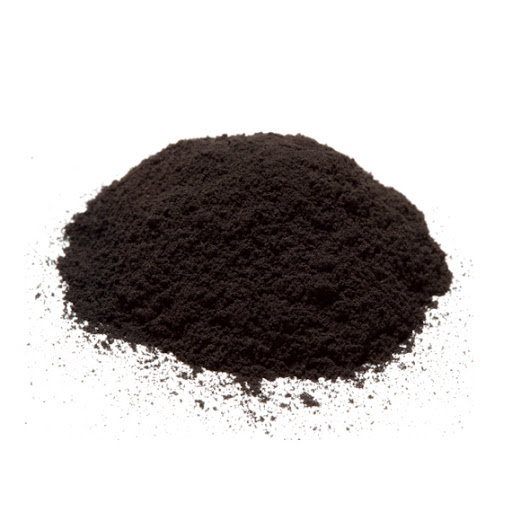
Cobalt compounds have played an important role in chemistry, industry, and art for centuries. Among them, Cobalt(II,III) oxide (Co₃O₄) stands out due to its fascinating properties and wide range of applications. From colorful pigments to cutting-edge energy storage devices, this compound bridges the gap between tradition and modern technology.
What is Cobalt(II,III) Oxide?
Definition
Cobalt(II,III) oxide is an inorganic compound that contains cobalt in two oxidation states: +2 and +3. It is commonly represented by the formula Co₃O₄.
Chemical Formula and Structure
-
Formula: Co₃O₄
-
It is a mixed valence compound, meaning it contains cobalt ions in more than one oxidation state.
-
Structure: It adopts a spinel crystal structure, which contributes to its unique physical and electronic properties.
Physical Properties of Cobalt(II,III) Oxide
-
Appearance: Black or gray crystalline powder.
-
Solubility: Insoluble in water but reacts with acids.
-
Density: About 6.1 g/cm³.
-
Melting Point: Decomposes before melting at high temperatures.
These properties make it stable and useful in high-temperature applications.
Chemical Properties of Cobalt(II,III) Oxide
-
Acts as both an oxidizing and reducing agent depending on reaction conditions.
-
Reacts with hydrochloric or sulfuric acid to produce cobalt salts.
-
Exhibits semiconducting behavior, making it useful in electronics.
How Cobalt(II,III) Oxide is Produced
Industrial Methods
-
Obtained by heating cobalt oxides or cobalt salts in air.
-
Produced during cobalt ore processing as an intermediate compound.
Laboratory Synthesis
-
Prepared by controlled heating of cobalt(II) hydroxide or cobalt carbonate in oxygen-rich environments.
Applications in Industry
Use in Ceramics and Glass Coloring
Cobalt(II,III) oxide is widely used to create deep blue and black pigments in ceramics and glass. It has been used for centuries in pottery and stained glass.
Catalysts in Chemical Reactions
It serves as an effective catalyst in various oxidation reactions, including:
-
Petrochemical industry processes.
-
Environmental catalysis for reducing pollutants.
Role in Energy Storage
One of the most important modern applications is in rechargeable lithium-ion batteries.
-
Enhances electrode performance.
-
Provides high energy density and stability.
It is also studied for use in supercapacitors due to its excellent charge storage capabilities.
Cobalt(II,III) Oxide in Pigments
Historically, cobalt oxides have been treasured as pigments. Co₃O₄ provides:
-
Blue hues in porcelain and glass.
-
Black coloration in glazes and enamels.
Its stability makes it resistant to fading, which is why it has been used in art for centuries.
Applications in Electronics
-
Magnetic materials: Co₃O₄ is ferrimagnetic, making it useful in memory storage devices.
-
Sensors: Used in gas sensors for detecting harmful emissions.
-
Semiconductors: Plays a role in thin-film technology.
Use in Catalysis
Cobalt(II,III) oxide is an important catalyst for:
-
Fuel cells: Enhances efficiency in clean energy devices.
-
Water splitting: Helps in producing hydrogen fuel, a step toward renewable energy.
Health and Safety Concerns
While useful, cobalt compounds can be hazardous.
-
Toxicity: Prolonged exposure can lead to respiratory issues and skin irritation.
-
Precautions: Should be handled with protective equipment and proper ventilation.
Environmental Impact
-
Mining: Extraction of cobalt often causes ecological damage and raises ethical concerns due to mining practices.
-
Recycling: Increasingly important for reducing environmental strain and ensuring sustainable supply.
Research and Future Developments
Scientists are exploring cobalt(II,III) oxide in:
-
Nanotechnology: For advanced sensors and catalysts.
-
Energy storage: High-performance battery electrodes.
-
Green chemistry: Sustainable catalytic processes.
Comparison with Other Cobalt Oxides
-
Cobalt(II) oxide (CoO): Greenish compound with different reactivity.
-
Cobalt(III) oxide (Co₂O₃): Less stable and less widely used.
-
Cobalt(II,III) oxide (Co₃O₄): The most industrially significant due to its balance of properties.
Conclusion
Cobalt(II,III) oxide is more than just a black powder—it’s a multifunctional compound that shapes industries ranging from ceramics to clean energy. With growing demand for sustainable technologies, its role in batteries, catalysts, and electronics is only expected to expand. However, addressing safety concerns and environmental impact remains essential for its responsible use.