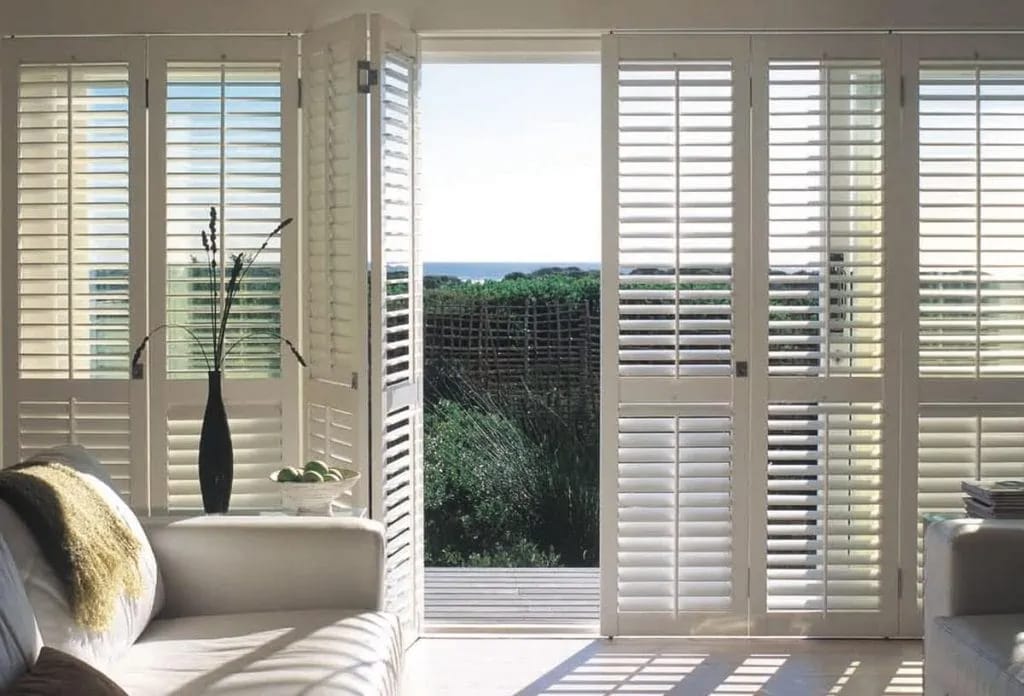
Adelaide homes in 2025 are showing a clear shift: window dressings are no longer an afterthought. Curtains and blinds Adelaide are working harder — blending style, performance, and tech to finish rooms that feel intentional, comfortable and distinctly local. Whether you’re refreshing a single living room or specifying window treatments for a whole new build, these are the trends that Adelaide homeowners, renovators and designers are choosing this year — and the practical tips to make them work for your space.
1. Warm, natural palettes — colour as atmosphere
After years of cool minimalism, 2025 is a season of warmer, earthier tones and occasional bold pops. Think olive and sage greens, mocha and clay neutrals, and jewel accents like burgundy or deep teal for feature curtains or statement Roman blinds. National colour forecasters have highlighted the return of richer hues — colours that create depth and a cosy atmosphere rather than erase it.
Practical tip for Adelaide homes: Pair warm-toned curtains with lighter timber furniture and woven textures (rugs, baskets) to balance the interior and bounce local natural light into the room. In compact rooms, use a neutral sheer layer close to the glass with a darker blockout panel for the dramatic colour — it keeps the room feeling open while letting you switch mood on demand.
2. Sustainable fabrics and low-impact finishes
Sustainability is a real and visible trend in window furnishings. Eco-friendly fabrics — organic cottons, linen blends, hemp and recycled-polyester textiles — are becoming mainstream as manufacturers and suppliers expand their ranges. These fabrics offer tactile texture and a lived-in look while reducing environmental impact. Many suppliers also promote lower-VOC (volatile organic compound) finishes and manufacturing processes, which is great for indoor air quality.
Practical tip: When comparing fabrics, ask for the mill data (composition, OEKO-TEX or equivalent certifications, care instructions). Linen-look blends are excellent for Adelaide’s Mediterranean climate — they breathe well, look timeless, and wear nicely with occasional sun exposure.
3. The rise of S-Wave and fluid pleats — contemporary tailoring
S-Wave (S-fold or wave) curtains continue to grow in popularity because they read as modern and tidy while delivering the sumptuous fall of traditional curtains. These use a continuous heading tape and ceiling/track fixings to create consistent soft folds, ideal for floor-to-ceiling glazing and open-plan living. They pair particularly well with minimalist hardware and hidden ceiling tracks, giving an architectural finish that complements Adelaide’s contemporary renovations.
Practical tip: For a seamless look, install the track to the ceiling (or soffit) so curtains span from ceiling to floor — this increases perceived height and suits the lofty living spaces common in new builds around the city.
4. Smart motorisation — convenience (and resale value)
Motorised blinds and powered curtain tracks are no longer luxury-only. In 2025 they’re increasingly accessible — battery-operated motors and better third-party smart integrations (Alexa, Google Home) make automated window coverings an attractive retrofit and specification item. Smart motorisation brings daily convenience (scheduled opening, remote control) and functional benefits (timed sun protection, improved energy control) that buyers are noticing.
Practical tip: If you’re adding motorisation to existing windows, choose battery-operated motors with solar recharge options to avoid rewiring. For new builds, hardwiring provides cleaner power and is better long-term for heavy drapery.
5. Layering: sheers + blockouts + blinds — versatility wins
Layering continues to be a dominant approach: combine a sheer to soften daylight, a mid-weight curtain for texture, and a blockout or cellular blind for night and thermal control. Layering lets a single window respond to multiple needs: privacy, daylighting, thermal insulation for Adelaide’s hot summers and cool winters, and acoustic softening in busy streets. This strategy keeps rooms flexible and future-proof as occupant needs change.
Practical tip: Use a double-track system (one track for sheer, one for heavy curtain) or a combined roller + sheer “day/night” system for compact windows. Choose colours across the layers that are tonal — they’ll read as an intentional composition rather than competing elements.
6. Honeycomb (cellular) blinds for insulation
Energy efficiency and thermal comfort are front-of-mind in Australian homes. Cellular/honeycomb blinds trap air in pockets, offering measurable insulation benefits — a real advantage in Adelaide, where summer solar gain and winter chill both matter. These blinds work especially well on north- and west-facing glazing to reduce heat transfer and help with energy bills.
Practical tip: Pick a cellular blind with the appropriate cell depth for your thermal goals (deeper cells = better insulation). Combine with blockout linings in bedrooms for darkness and extra thermal performance.
7. Texture and tactile storytelling — we want to feel our materials
Surface and tactile interest are trending: soft velvets, ribbed weaves, basketry-like textures, and natural yarns. Textured curtains add depth and a sense of craftsmanship, which is why designers are turning to artisanal fabrics and richer weaves to elevate an otherwise neutral palette. This trend is visible across both curtains and Roman blinds, where texture reads as a substitute for patterning.
Practical tip: Use texture to anchor a neutral space — a woven linen curtain will read differently in light than a sleek voile and will likewise alter the perceived warmth of upholstery and timber finishes.
8. Pattern — modest maximalism and botanical prints
Alongside texture, selective pattern use is on the rise. Botanical and geometric patterns are popular for feature windows, Roman blinds and throw panels. This is not an all-over maximalist revival, but rather strategic use of pattern to inject personality — a patterned Roman blind in a study, or a floral feature curtain on a single large window, for instance.
Practical tip: When you choose a patterned fabric, match the scale to the room size. Large scale patterns suit open-plan living and large windows; smaller repeats work best in compact bedrooms or secondary windows.
9. Japandi and restrained minimalism — a local twist
Global styles like Japandi — a hybrid of Japanese minimalism and Scandinavian warmth — have traction in Adelaide. This aesthetic favours clean lines, natural materials and warm neutrals — a natural partner to timber floors, simple joinery and the city’s coastal/earthy palette. Window treatments in this idiom tend to be understated: linen sheers, neutral cellulars, or simple Roman blinds with minimal hardware. Recent Adelaide homes and showhouses have showcased this restrained, tactile approach.
Practical tip: For a Japandi-leaning room, choose muted tones and keep hardware hidden. A ceiling-mounted neutral sheer and a single-layer natural linen curtain can achieve the look with minimal fuss.
10. Day/night solutions and multi-functional systems
Dual-layer roller blinds (day/night) and “zebra” / privacy screens that combine sheer and opaque bands are particularly handy for Adelaide households that need both privacy and daylight management without full curtain stacks. These systems provide instant control over glare and privacy while maintaining a slim profile.
Practical tip: Day/night systems work brilliantly for north-facing living rooms where you want light but want to avoid full glare midday. They’re also popular in rooms where space is at a premium.
11. Acoustic considerations — thicker curtains for quieter rooms
With more people working from home and living in denser neighborhoods, acoustic performance matters. Heavy, lined curtains help reduce reverberation and street noise — a practical benefit for Adelaide’s inner suburbs and homes near busy roads. Combine with rugs, soft furnishings and window seals for the best result.
Practical tip: If noise reduction is a priority, specify a heavy-weight curtain with a thermal or blackout lining and ensure a full-height, floor-to-ceiling installation to maximise the acoustic barrier.
12. Local buying and bespoke workmanship — Adelaide still values made-to-measure
Adelaide homeowners increasingly favour local showrooms and made-to-measure services. Bespoke curtains and professionally installed tracks deliver the finish and longevity that off-the-shelf products often can’t match. Local fabric libraries and in-home measure-and-fit services are widely available across the Adelaide metro area, making custom options accessible and practical.
Practical tip: When budgeting, factor in professional measurement and installation — for floor-to-ceiling curtains and motorised systems it’s rarely worth cutting corners. A good installer will account for overlaps, correct hem lengths, and optimal track placement.
13. Maintenance, longevity and care — choose fabrics you can live with
A trending practical test in 2025: homeowners increasingly ask, “How easy is this to care for?” Fabrics that shrug off fading, can be easily dusted or professionally cleaned, and resist pet wear are winning. Many modern textiles have improved fade resistance and washable finishes; always check care labels and ask your supplier about cleaning options.
Practical tip: For busy homes, choose synthetic-linen blends or poly-linen for curtains — they look like natural fibres but are easier to wash and maintain. For bedrooms where blockout is essential, pick blockout linings that attach but can also be unpicked for cleaning.
14. Budgeting smartly — where to allocate spend
If you’re working to a budget, prioritise the things that last: quality tracks, proper measuring/installation, and the right lining (thermal or blockout). Fabric can be mid-range and still look premium when the heading and install are spot on. Motorisation and bespoke prints should come later in your budget if cost is a concern.
Practical tip: Spend on a good track/rod system and professional installation. These elements are visible in the finished look and affect how well the curtains function for years.
Where to see trends in Adelaide (showrooms & inspiration)
Adelaide has a strong local network of curtain and blind suppliers and showrooms where you can touch fabrics, audition colours under local daylight and test mechanisms. Visiting a showroom or arranging an in-home consult helps you visualise how a fabric performs in your home’s orientation and light. Local experts can also advise on finishes appropriate to South Australia’s climate and building stock.
Final thoughts — bring purpose to style
In 2025, the smartest window treatments are those that marry purpose and personality. Adelaide’s trends are about tactile materials, warmer colour directions, smarter systems and environmental awareness — all balanced with practical choices that fit family life and climate. Whether you choose a soft-linen S-wave curtain across a picture window, a cellular blind to improve thermal comfort, or a motorised solution for hard-to-reach glazing, the key is to pick options that look great and perform for the long term.