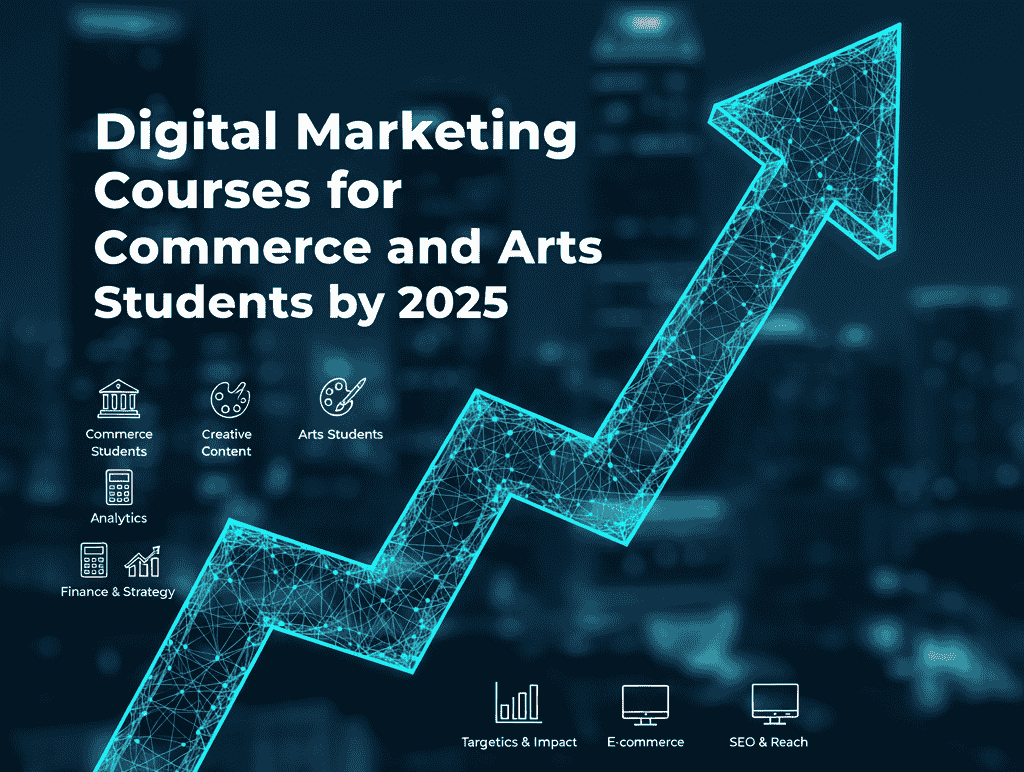
In the past, career paths for commerce and arts students seemed limited to banking, teaching, accounting, or creative professions. Fast forward to 2025, and the landscape looks entirely different. Today, digital marketing has emerged as one of the most accessible and rewarding fields—especially for students who bring a mix of analytical and creative skills.
Why Digital Marketing Appeals to Commerce and Arts Students
Digital marketing isn’t only about technical know-how. At its core, it combines creativity, analysis, communication, and problem-solving—skills commerce and arts students naturally develop during their studies.
-
For Commerce Students: Marketing strategy, budgeting, consumer psychology, and data interpretation feel like a natural extension of their academic background.
-
For Arts Students: Storytelling, design, content creation, and communication skills seamlessly align with digital marketing demands.
By 2025, NASSCOM reports that digital marketing roles in India are expected to grow by 27%, with employers actively hiring graduates from diverse academic streams, not just technology.
Key Digital Marketing Skills for Arts and Commerce Backgrounds
1. Content Creation and Storytelling
Arts students shine in blogs, social media posts, and brand storytelling. With platforms prioritizing authenticity, their ability to create narratives stands out.
2. Data Analysis and Campaign Management
Commerce graduates can dive into analytics, understanding metrics like ROI, CPC, or conversion rates. These skills help optimize campaigns and budgets.
3. Social Media Marketing
Platforms like Instagram, LinkedIn, and YouTube continue to dominate in 2025. Arts students’ creativity combined with commerce students’ strategic thinking can build engaging campaigns.
4. SEO and SEM
Both streams benefit from learning search engine optimization and paid advertising. Arts students craft engaging copy, while commerce students track performance and ROI.
5. Digital Branding
The future of brands lies in creating a consistent digital identity. With design, psychology, and strategy, arts and commerce students are well-positioned to lead these efforts.
The Role of a Digital Marketing Training Institute in Salem
While online resources are plentiful, structured learning accelerates growth. A Digital Marketing Training Institute in Salem provides:
-
Hands-On Experience: Students work on live campaigns, not just theory.
-
Local Context: Guidance on applying digital strategies for regional businesses in Salem.
-
Career Pathways: Internship support, project portfolios, and mentorship prepare students for real-world opportunities.
For commerce and arts students, such training bridges the gap between classroom knowledge and market-ready skills.
Career Opportunities for Arts and Commerce Students in Digital Marketing
Digital marketing isn’t one-size-fits-all. Depending on your interests, it opens doors to diverse roles:
-
Arts Students: Content writer, social media manager, brand strategist, video marketer, UX copywriter.
-
Commerce Students: Digital marketing analyst, campaign manager, SEO strategist, e-commerce specialist.
With flexible freelance and remote opportunities, many students in Salem are already using these roles to kickstart careers even before graduation.
Trends in 2025 That Students Should Know
-
AI Integration: Tools like Jasper AI and Canva AI assist in execution but still require creative oversight.
-
Short-Form Video Marketing: Platforms such as Reels, Shorts, and TikTok dominate brand reach.
-
Voice and Visual Search: Optimizing content for smart speakers and visual queries is essential.
-
Hyper-Personalized Marketing: Brands demand tailored strategies, a space where both analytical and creative students excel.
These trends suggest that arts and commerce graduates who skill up now will remain relevant in the years ahead.
A Beginner’s Roadmap for Students
-
Enroll in a Course: Start with a digital marketing course in Salem to gain structured knowledge.
-
Experiment Early: Apply learning by managing a personal blog or a small business’s social media.
-
Build a Portfolio: Showcase content, campaign reports, and creative projects.
-
Stay Updated: Follow 2025 trends and adapt quickly to new tools.
-
Network: Collaborate with peers, join online communities, and connect with professionals.
This roadmap ensures students transition from theory to real-world skills smoothly.
FAQs
1. Can commerce and arts students succeed in digital marketing without a tech background?
Yes. Digital marketing relies more on creativity, strategy, and analysis than deep technical expertise.
2. How does a digital marketing course in Salem help local students?
It provides hands-on projects, mentorship, and context-specific strategies relevant to Salem’s growing business scene.
3. What career options exist for students after completing training?
Roles include content writer, social media manager, SEO analyst, digital strategist, and campaign manager.
4. How long does it take to become job-ready in digital marketing?
Most students see progress within 3–6 months of focused training and practice.
5. Is digital marketing more suited for arts or commerce students?
Both streams benefit equally—arts students for creativity, commerce students for strategy and analysis.
Conclusion
By 2025, digital marketing has become a dynamic field where both arts and commerce students can thrive. With structured training and consistent practice, they can leverage their unique strengths to build impactful careers. A digital marketing course in Salem serves as the bridge between academic learning and professional success.
As Ampro Techvalley highlights, the students who adapt early to this digital shift will not just find jobs—they’ll create opportunities in a world driven by creativity and strategy.