Modern investors evaluate startups through multiple lenses, and while burn rate remains important, it’s just the beginning of their analysis. This guide explores the capital efficiency metrics that truly matter to investors in 2025, helping founders understand what signals demonstrate disciplined growth and operational excellence.
Why investors track more than burn 🔍
Burn rate might get the headlines, but it doesn’t tell the full story. Smart investors aren’t just asking, “How much are you spending?” They want to know, “What are you getting for it?”
Capital-efficiency metrics answer that question. They show how effectively your startup converts capital into momentum. Whether you’re bootstrapped or funded, the ability to demonstrate efficient execution is a competitive advantage that sets you apart from companies that simply spend without strategy.
The shift toward efficiency-focused investing reflects market realities. When the runway is short and the market is cautious, capital efficiency becomes the clearest signal that your team is resourceful, disciplined, and ready to grow without reckless spending. Investors have seen too many promising startups flame out because they confuse activity with progress.
This evolution in investor thinking creates opportunities for founders who embrace disciplined growth. Companies that can demonstrate strong unit economics, efficient customer acquisition, and improved margins often secure better terms and stronger investor relationships. The key is understanding which metrics matter most and how to present them effectively.
Proper financial statements become crucial here, as they provide the foundation for calculating these efficiency metrics accurately. Without clean, reliable financial data, it’s impossible to demonstrate the operational discipline that investors increasingly demand.
You don’t need to show profitability from day one, but you absolutely need to show control. Investors want evidence that you understand your business model, can identify what’s working, and have the discipline to double down on proven strategies while cutting what isn’t delivering results.
Efficiency signals that matter in 2025 📊
The best capital-efficiency metrics reveal patterns, not just outcomes. Here’s what investors are paying attention to now, and why each metric matters for demonstrating sustainable growth potential.
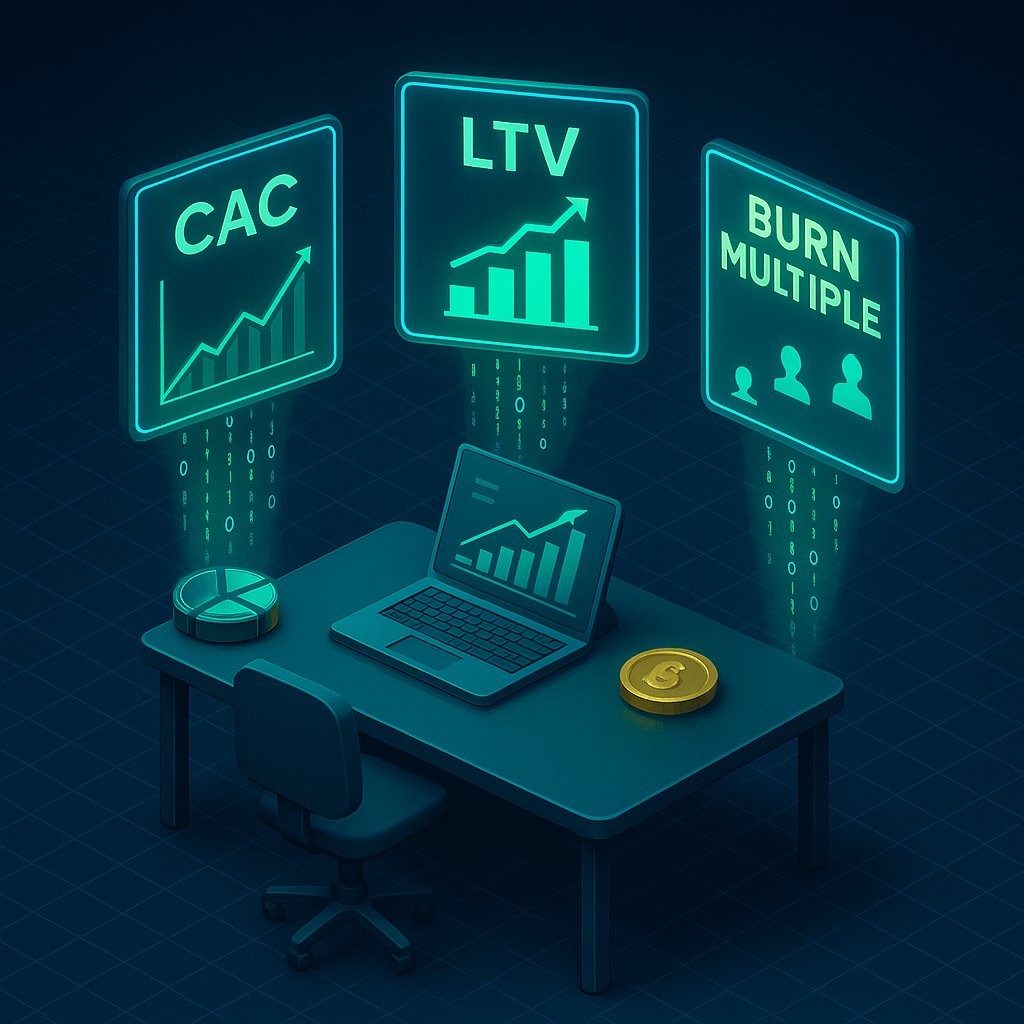
CAC payback period shows how long it takes to earn back your cost to acquire a customer. The tighter this number, the better your cash flow dynamics. Under 12 months is strong, under six months is exceptional. This metric reveals whether your customer acquisition strategy is sustainable at scale.
Revenue per employee provides a quick signal of operational leverage, especially important for lean teams. It shows whether you’re building a scalable business model or one that requires constant headcount additions to grow. Technology companies typically aim for $200K+ per employee, though this varies significantly by industry and stage.
LTV: CAC ratio demonstrates the fundamental economics of your business model. Healthy ratios run 3:1 or better, meaning each customer generates three times what you spend to acquire them. Anything below 2:1 raises questions about long-term viability and suggests either pricing issues or inefficient acquisition strategies.
Burn multiple measures of how much you’re burning for every dollar of net new ARR. The ideal range sits under 1.5x, meaning you spend less than $1.50 to generate each new dollar of recurring revenue. This metric directly connects spending to growth outcomes.
Gross margin trends matter more than absolute numbers, especially for early-stage companies. Investors look for improving margins over time, which suggests increasing operational efficiency and pricing power. Direction matters as much as the current state.
These metrics work together to paint a picture of operational maturity. Accounting solutions for startups help ensure these calculations are accurate and consistently tracked, providing the reliability investors expect when evaluating your business.
Investors don’t expect perfection from early-stage companies, but they do expect awareness. Understanding these metrics and their implications demonstrates that you’re building with intention rather than just hoping for the best.
Proving traction without overspending 💬
You don’t need a massive paid campaign or a bloated team to show meaningful progress. The most efficient startups prove traction with focus, not firepower, and investors have learned to recognize and value this approach.
Customer quality trumps quantity every time. Investors look for retention, engagement, and expansion rather than just acquisition numbers. If your early customers are renewing at high rates, referring new business, or growing their accounts over time, that demonstrates product-market fit more convincingly than large user numbers with poor engagement.
The best traction metrics focus on engagement depth rather than vanity metrics. Monthly active users matter less than daily engagement. Free signups matter less than paid conversions. Download counts matter less than feature adoption. Smart investors have learned to dig beneath surface-level metrics to understand real user behavior.
Track how each dollar contributes to measurable progress. If your last $10K in marketing spend delivered a $30K qualified pipeline, that’s capital working with clear intent. If a $15K hire eliminated a bottleneck that accelerated delivery by two months, that’s efficiency in action. Make these connections visible in your reporting and investor updates.
Building efficient growth systems requires the right foundation. Cloud accounting solutions provide the real-time visibility needed to track these efficiency metrics accurately and make rapid adjustments based on what the data reveals.
Efficiency doesn’t mean slow. It means you’ve figured out what works and you’re doubling down with discipline. The companies that master this balance often outperform their more heavily funded competitors because they’ve built sustainable growth engines rather than unsustainable burn machines.
Consider how you can demonstrate leverage in everything you do. One well-executed partnership might deliver more qualified leads than months of paid advertising. One strategic hire might unlock capabilities that would otherwise require an entire team. Investors recognize and value this kind of strategic thinking.
The capital-efficiency dashboard we recommend 📎
At EIM, we build dashboards that help founders track capital-efficiency metrics in real time, turning abstract concepts into actionable insights that drive better decision-making and stronger investor relationships.
The monthly dashboard should include runway remaining calculated in months rather than just cash balance, providing clear visibility into operational sustainability. CAC payback period shows how quickly customer acquisition investments return value. Burn multiple connects, spending directly to revenue growth, while revenue per team member demonstrates scaling efficiency.
Tool cost versus utilization reveals whether your software investments are delivering value or just adding expense. Marketing spend compared to pipeline created shows channel efficiency and helps optimize resource allocation across different customer acquisition strategies.
None of these requires enterprise-grade systems or complex implementations. A clean spreadsheet or a dashboard built in tools like Coda or Notion provides sufficient functionality for most early-stage companies. What matters most is consistent tracking, regular review, and a clear connection between these metrics and strategic decisions.
The dashboard becomes powerful when it drives behavior rather than just reporting outcomes. If CAC payback period is trending upward, that might signal a need to optimize onboarding or adjust the pricing strategy. If revenue per employee is declining, it might indicate hiring ahead of need or inefficient resource allocation.
Regular review sessions transform these metrics from static reports into strategic planning tools. Monthly metric reviews help identify patterns, spot problems early, and make data-driven adjustments to growth strategies before issues become critical.
This approach to Capital-Efficient Growth: Maximizing Impact with Minimal Investment creates a foundation for sustainable scaling that investors recognize and value. The companies that master these metrics often secure funding more easily and on better terms because they demonstrate operational maturity.
Capital efficiency isn’t just a survival tactic or a temporary response to market conditions. It’s a sustainable approach to building valuable companies that generate strong returns for founders, employees, and investors alike. The earlier you adopt these practices, the stronger your foundation becomes for long-term growth and success.
Book a free consultation to discuss how we can help you build investor-ready financial systems and track the metrics that matter most for your stage and industry.
Natasha Galitsyna
Co-Founder & Creator of Possibilities @ EIM
Serving the startup community since 2018