When you’re seeking to combine strength, aesthetics, and functionality in one seamless part, choosing the right process and partner matters. That’s where a skilled overmolding service company comes into play transforming basic components into high-performance, ready-to-use pieces that stand out in demanding environments. In this article, we’ll explore how the overmolding process works, why it delivers superior results, and how selecting the right partner can make all the difference in your manufacturing journey.
Understanding Overmolding: More Than Just Molding
What Is Overmolding?
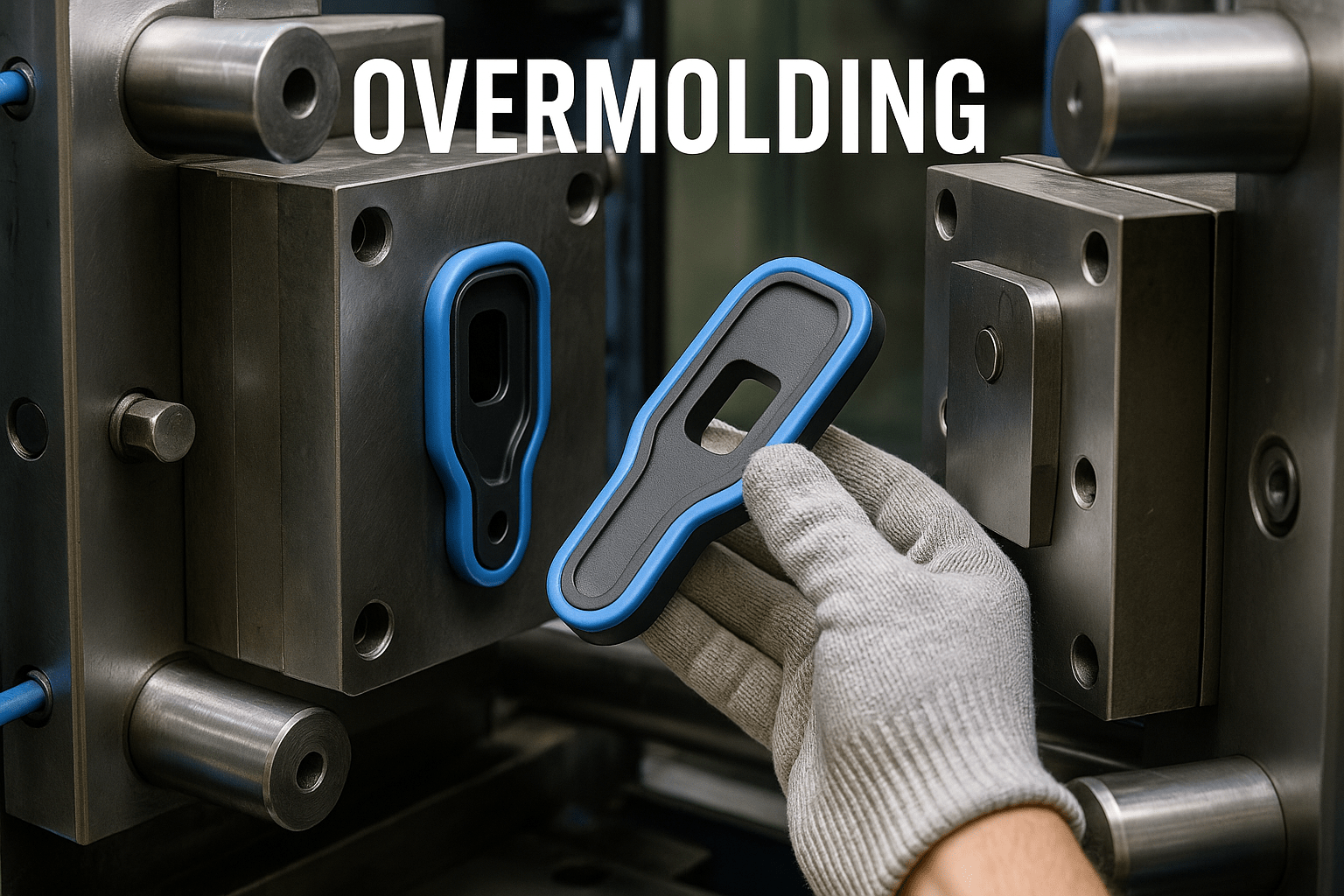
Overmolding is the method of molding a softer or secondary material over a primary substrate or insert—like injecting a flexible elastomer over a rigid plastic core. The process typically involves two main steps: first creating the substrate (insert molding), and then placing it into a second mold where the overmold material is applied. A professional overmolding service company executes these steps with precision to ensure optimal bonding and performance.
Why Use Overmolding?
There are many reasons manufacturers choose overmolding:
-
Enhanced durability: The bond between substrate and overmold improves wear resistance, shock handling, and environmental protection.
-
Ergonomic and functional design: Softer materials over rigid cores can deliver comfortable grips, tactile feedback, or sealed surfaces.
-
Reduced assembly: Combining materials in one part often eliminates secondary steps like gluing, welding, or adding seals saving time and cost.
-
Aesthetic versatility: Overmolding allows creative combinations of textures, colors, and finishes—enhancing both look and performance.
Where Does It Fit?
You’ll find overmolding in a variety of industries: automotive (grips, seals), medical devices (handles, interfaces), consumer electronics (rubberized buttons, tactile surfaces), and industrial tools (durable and ergonomic grips). A trusted overmolding service company tailors materials and processes to each application’s requirements.
Key Factors That Differentiate Top Overmolding Service Companies
Precision Tooling and Mold Design
Quality overmolding begins with mold design. The alignment between the insert and overmold must be exact to avoid defects like voids, flash, or delamination. Leading providers maintain tight tolerances, advanced CNC tooling, and mold flow simulation to guarantee consistent results.
Material Compatibility and Bonding
The success of the overmolder depends on selecting materials that adhere well, manage stress, and satisfy performance demands. Whether you’re working with a rigid plastic core and soft TPE overmold, a metal insert with durable rubber shell, or specialized polymers for medical use material testing and compatibility matter. A full-service overmolding company guides you through this selection.
Process Control and Quality Assurance
Once the mold and material are set, consistent process control takes over. Injection pressure, melt temperature, cycle time, and cooling all affect the bond quality and dimensional accuracy. A strong overmolding service company implements inline monitoring, statistical process controls (SPC), and post-process testing (adhesion, hardness, functionality) to ensure every part meets specification.
Application-Driven Customization
No two projects are exactly alike. Whether you’re designing a sealed handle with overmolding for rugged environments, a sleek electronic housing with soft-touch overmolding, or a medical tool requiring biocompatible materials and sterile finish—your provider must adapt. The right overmolding service company guides you through design for manufacturability (DFM), accommodates low volume or high volume, and ensures the final part integrates seamlessly into your system.
How to Choose the Right Overmolding Service Company
Assess Their Experience and Capabilities
Look for a partner who has proven experience in your target industry and complexity level. Ask for case studies, sample parts, and references especially when your application has critical performance or regulatory demands.
Evaluate Their Engineering & Prototype Support
Strong partners don’t just run the mold they participate in your design process. They help you optimize geometry, select materials, and plan for manufacturing scale-up. Early engagement in DFM reduces revisions and keeps timeline on track.
Understand Their Quality Systems and Documentation
If your industry requires certifications (e.g., ISO, medical, automotive), make sure the overmolding service company provides traceability, inspection records, and process validation documentation.
Consider Lead Times and Scalability
Whether you’re making 100 parts or 100,000, your partner must scale. Evaluate their tooling lead times, mold life, support for tooling revisions, and production flexibility. Also consider cost per part across volumes.
Ask About Post-Processing and Finishing
Overmolding is more than just putting one material over another. Consider if you need finishing operations like overmolded part removal, trimming, secondary machining, or assembly into a larger system. A full-service provider simplifies these hand-offs.
Real-World Impact of Overmolding
Imagine a handheld power tool with a rubber-grip over a hard plastic body. The overmolding process delivers durability, user comfort, and improved aesthetics all in one piece. Or consider a medical-device handle that needs a biocompatible soft-touch coating over a rigid internal frame: precise material bonding ensures no separation under repeated use.
In each case, the role of an expert overmolding service company cannot be overstated. From initial design to final inspection, their expertise ensures you achieve the part performance you need while staying on schedule.
Conclusion
When you require more than just raw plastic parts when durability, ergonomics, aesthetics, and assembly reduction are critical the role of a skilled overmolding service company becomes pivotal. By understanding the process, evaluating partners on their tooling, materials, quality systems, and support, you position your project for success. Embrace overmolding not just as a manufacturing step, but as a strategic capability: one that turns your design vision into high-performance reality.