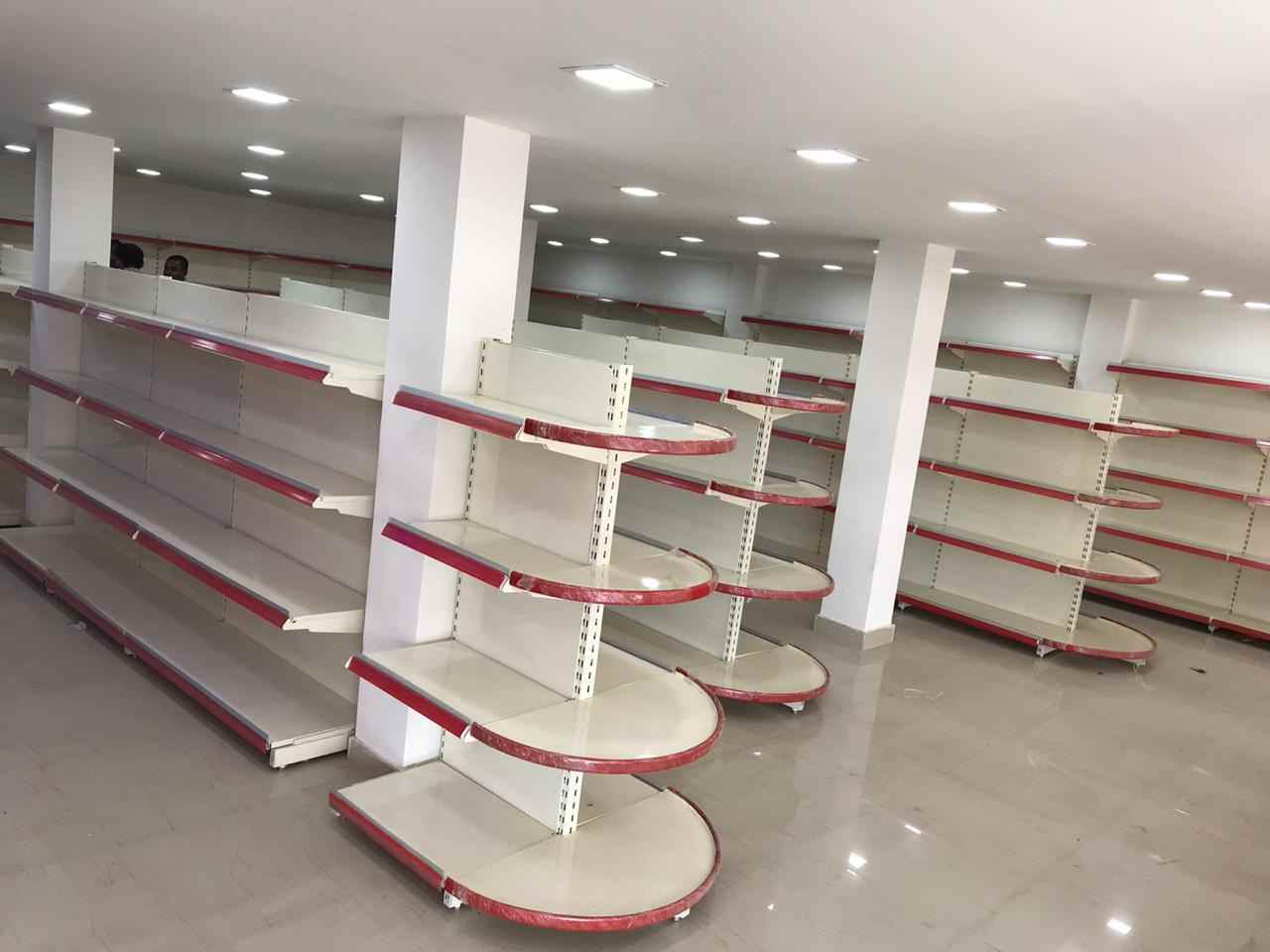
In the intricate world of international trade, a seemingly simple string of numbers can be the difference between a seamless shipment and a logistical nightmare. For businesses involved in the import or export of retail and warehouse infrastructure, understanding the Harmonized System (HS) code for gondola racks is not just a regulatory formality—it’s a critical component of cost calculation, compliance, and supply chain efficiency.
This guide demystifies the HS code classification for gondola racks, providing a clear roadmap for traders, procurement managers, and business owners to navigate customs procedures with confidence.
What is an HS Code and Why Does it Matter?
The Harmonized System (HS) is a globally standardized nomenclature developed by the World Customs Organization (WCO) for classifying traded products. Think of it as a universal language for customs authorities worldwide. Over 200 countries use this system, which encompasses more than 5,000 commodity groups.
For gondola racks, the correct HS code is paramount for several reasons:
-
Determining Import Duties and Taxes: The HS code directly dictates the tariff rate a country will levy on the imported goods. An incorrect code can lead to overpaying or underpaying duties, the latter of which can result in severe penalties.
-
Trade Statistics and Compliance: Governments use HS codes to monitor and control the import and export of specific goods. Accurate classification ensures compliance with national and international trade regulations.
-
Rules of Origin: The code is essential for applying preferential trade agreements. If your gondola racks are sourced from a country with a free trade agreement, the correct HS code is needed to claim reduced or zero tariff rates.
-
Streamlined Customs Clearance: Providing the correct HS code on commercial invoices, packing lists, and other shipping documents prevents delays, inspections, and potential seizures at the border.
Classifying the Gondola Rack: A Logical Breakdown
Classifying a gondola rack requires a logical, step-by-step approach based on its physical characteristics and intended use. The HS code is structured in a hierarchy of Headings (4-digit), Subheadings (6-digit), and national tariff lines (8-12 digits).
Step 1: Identify the Primary Material
The most critical factor is the material of construction. The vast majority of gondola racks are made of metal, specifically steel or aluminum.
-
Heading 94.03: This heading covers “Other furniture and parts thereof.” It includes a wide range of furniture not falling into more specific categories. However, its applicability to gondola racks is a common point of confusion.
-
Heading 73.08: This heading covers “Structures (excluding prefabricated buildings of heading 94.06) and parts of structures… of iron or steel; plates, strips, rods, bars, angles, shapes, sections, tubes and the like, prepared for use in structures, of iron or steel.”
-
Heading 83.02: This is for “Base metal mountings, fittings and similar articles… suitable for furniture, doors, staircases, windows, blinds, coachwork, saddlery, trunks, chests, caskets…; base metal hat-racks, hat-pegs, brackets and similar fixtures.”
The Verdict: Why 94.03 is Usually Correct
While gondola racks are structural, the key distinction lies in their function. Customs authorities and the WCO’s Explanatory Notes generally classify “furniture” as articles designed for placing on the floor or ground and which are used for containing, storing, or displaying various items.
A gondola rack, used in a retail environment to display merchandise, fits this definition more closely than a structural building component (like a steel beam in a warehouse). Therefore, the most universally accepted heading for finished, assembled gondola racks is Heading 94.03.
Step 2: Diving into the Subheadings
Under Heading 94.03, we find more specific 6-digit subheadings. The classification then depends on the primary material of the main frame.
-
9403.20 – Furniture of metal: This is the most common subheading for standard steel or aluminum gondola racks.
-
9403.30 – Furniture of wood: This would apply to less common wooden display units.
-
9403.40 – Furniture of plastics: This could apply to lightweight or specialized display racks made primarily from plastics.
-
9403.50 – Furniture of other materials: This is a catch-all category for materials like rattan or bamboo.
For a typical metal gondola rack, the 6-digit HS code is 9403.20.
Step 3: National Specifics (The 8-12 Digit Level)
Beyond the 6-digit level, individual countries add their own codes for more granular tracking and for applying specific duty rates. For example:
-
In the United States (HTSUS): The code might be 9403.20.0010 for “Metal furniture, other than chairs… Seats, metal household furniture, and metal furniture for offices, other.”
-
In the European Union (TARIC): The code could be 9403.20.00 for “Other metal furniture.”
-
In Malaysia: The Malaysian Customs Department will have its own 8-digit code under 9403.20.00.
It is the importer’s responsibility to identify the correct national tariff code based on the final destination country’s customs schedule.
Special Considerations and Potential Pitfalls
-
Unassembled vs. Assembled (Knock-Down): Generally, goods imported unassembled or disassembled (KD) are classified under the same heading as their assembled counterparts. Your gondola racks shipped as a flat-pack will still fall under 9403.20.
-
Parts vs. Finished Goods: Individual components like shelf brackets, uprights, or base plates might be classified under a different heading if imported separately. For example, unmounted base metal fittings could fall under HS Code 8302.50 (“Base metal hat-racks, hat-pegs, brackets and similar fixtures”).
-
When in Doubt, Get a Ruling: The most secure way to handle ambiguity is to apply for an Advanced Ruling or Binding Tariff Information (BTI) from the customs authority of the importing country. This provides a legally binding classification for your specific product, eliminating uncertainty.
Frequently Asked Questions (FAQs)
1. Is the HS code 9403.20 the same for every country?
No. The first six digits (9403.20) are universal across all countries that are members of the WCO. This ensures a common basis for classification. However, the subsequent digits (7th through 12th) are defined nationally and will differ from country to country. You must always check the specific import country’s tariff schedule for the complete code.
2. What happens if I use the wrong HS code?
Using an incorrect HS code can have serious consequences. It can lead to:
-
Customs Delays: Your shipment will be held for inspection and re-classification.
-
Financial Penalties: You may face fines for misdeclaration.
-
Duty Discrepancies: You could be charged back duties if you underpaid, or you may have overpaid unnecessarily.
-
Loss of Privileges: Repeated errors can flag your company for increased scrutiny on future shipments.
3. My gondola rack is part of a larger store fixture shipment. How do I classify it?
Each item in a shipment should be classified separately under its own HS code. A single commercial invoice can list multiple HS codes. Do not group different types of furniture or fixtures under one code. A metal gondola rack (9403.20), a wooden checkout counter (9403.30), and a glass display case (9403.50) would all have distinct codes.
4. Can I classify a gondola rack under Heading 73.08 as a steel structure?
While it might seem logical, this is generally incorrect for finished display units. Heading 73.08 is intended for structural components used in construction and civil engineering (e.g., bridges, towers, building frames). A gondola rack’s primary function is not structural to a building but functional for storage and display, firmly placing it in the “furniture” category of Chapter 94. Attempting to use 73.08 could be challenged by customs, leading to delays and re-classification.
5. Where can I find the official HS code for my destination country?
The best source is always the official customs authority of the importing country. Their websites typically host a searchable online tariff database. For complex cases, it is highly advisable to consult with a licensed customs broker or a trade compliance specialist who has expertise in that specific market. They can provide definitive guidance and help you navigate the nuances of national legislation.