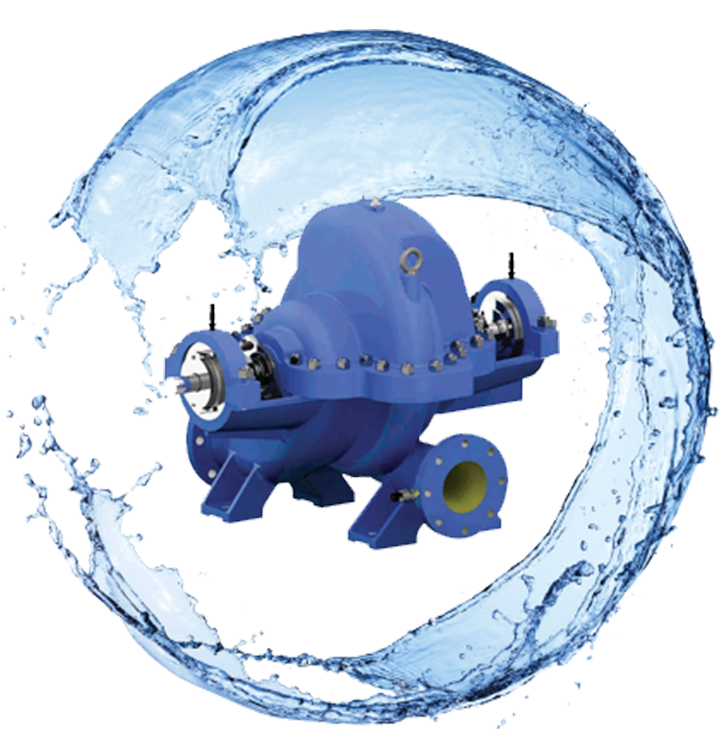
Efficient fluid handling is critical in modern industries, municipalities, and infrastructure projects. Pumps are at the heart of this process, and among the many designs available, horizontal split case pumps have earned a reputation for reliability, durability, and efficiency. Known for their double suction impeller and horizontally split casing, these pumps are a trusted choice where large volumes of liquid need to be moved continuously and economically.
This blog explores the applications, efficiency benefits, and maintenance practices of horizontal split case pumps, while also highlighting why they remain one of the most widely used pump types across industries.
Understanding Horizontal Split Case Pumps
A horizontal split case pump is a centrifugal pump where the casing is divided horizontally along the shaft centerline. This split design enables easy access to internal components like the impeller, shaft, bearings, and seals without disturbing connected piping or motor alignment.
Unlike single-suction pumps, horizontal split case pumps use a double suction impeller, which allows fluid to enter from both sides. This balanced design reduces axial thrust, improves efficiency, and extends the lifespan of the bearings and seals.
These qualities make horizontal split case pumps the preferred choice for high-flow, continuous-duty applications.
Design Features of Horizontal Split Case Pumps
Horizontal split case pumps are engineered for heavy-duty operations and are designed with precision. Some notable features include:
-
Horizontally Split Casing – Provides easy inspection and maintenance access.
-
Double Suction Impeller – Minimizes axial loads and ensures balanced operation.
-
Heavy-Duty Shaft & Bearings – Capable of handling high loads with minimal wear.
-
Flexible Material Selection – Available in cast iron, stainless steel, or bronze to suit specific liquids.
-
High Hydraulic Efficiency – Designed to deliver optimum performance with reduced energy consumption.
Working Principle of Horizontal Split Case Pumps
The operation of a horizontal split case pump is based on centrifugal force. Here’s a step-by-step look:
-
Fluid enters through the suction nozzle.
-
The double suction impeller draws liquid symmetrically from both sides.
-
The impeller imparts velocity to the fluid, converting mechanical energy into kinetic energy.
-
The pump casing directs the flow and converts velocity into pressure energy.
-
Pressurized fluid exits through the discharge nozzle, ready for delivery.
This principle makes the pump ideal for high-capacity, continuous pumping in both clean water and process fluid applications.
Advantages of Horizontal Split Case Pumps
Industries prefer horizontal split case pumps for several reasons:
-
Energy Efficiency – The double suction impeller reduces energy losses.
-
Operational Reliability – Balanced forces minimize vibration and wear.
-
Easy Maintenance – Split casing allows fast servicing without removing piping.
-
Longer Service Life – Bearings and seals last longer due to balanced loads.
-
Versatile Capacity – Can handle high flows, from hundreds to thousands of cubic meters per hour.
-
Reduced Cavitation Risk – Low NPSH requirement prevents damage and performance loss.
Applications of Horizontal Split Case Pumps
The versatility of horizontal split case pumps makes them essential in various industries. Let’s explore some of the most common applications:
1. Municipal Water Supply & Distribution
Cities rely on horizontal split case pumps for continuous delivery of drinking water. Their high capacity and efficiency make them suitable for large-scale distribution networks.
2. Irrigation & Agriculture
In agriculture, reliable pumping ensures steady water supply for crops. Horizontal split case pumps are widely used in irrigation projects, canals, and large farms where high flow rates are required.
3. HVAC Systems
Large commercial buildings, hospitals, and airports depend on these pumps for circulating chilled and hot water in HVAC systems. They provide steady, efficient flow for climate control.
4. Fire Protection Systems
Firefighting requires pumps that are both reliable and fast-acting. Horizontal split case pumps are certified by NFPA and other standards, making them a trusted choice in firefighting installations.
5. Power Generation
Power plants need pumps for cooling water circulation, boiler feed, and condensate extraction. Horizontal split case pumps meet these high-capacity requirements efficiently.
6. Industrial Processing
Industries like chemicals, steel, pulp & paper, and textiles use these pumps for handling process water, cooling, and wastewater.
7. Desalination & Water Treatment
Horizontal split case pumps are also applied in desalination plants and municipal wastewater treatment plants, where reliability is crucial.
Efficiency Benefits of Horizontal Split Case Pumps
Energy costs are a major consideration in pump selection, especially for facilities that run pumps continuously. Horizontal split case pumps deliver notable efficiency benefits:
-
Reduced Power Consumption – Optimized impeller design minimizes energy waste.
-
High Hydraulic Efficiency – Double suction design balances flow, reducing turbulence.
-
Lower Operational Costs – Over time, energy savings outweigh initial investment.
-
Compatibility with VFDs – Can be paired with variable frequency drives for smart energy management.
Industries that prioritize sustainability and energy efficiency often select horizontal split case pumps to meet long-term goals.
Maintenance of Horizontal Split Case Pumps
One of the biggest advantages of horizontal split case pumps is ease of maintenance. Proper upkeep ensures long life and consistent performance. Key maintenance practices include:
-
Lubrication – Bearings must be regularly lubricated to avoid overheating.
-
Seal Inspection – Mechanical seals or gland packing should be checked for leaks.
-
Impeller Checks – Regular inspection helps identify erosion or scaling early.
-
Vibration Monitoring – Abnormal vibration may indicate misalignment or wear.
-
Bearing Replacement – Bearings should be replaced periodically to avoid unexpected failures.
-
Shaft Alignment – Misalignment leads to higher wear and reduced efficiency.
Because of the split casing, maintenance is simpler and faster compared to other centrifugal pumps, minimizing downtime.
Horizontal Split Case Pumps vs. Other Pump Types
To understand their benefits better, let’s compare horizontal split case pumps with other pump designs:
| Feature | Horizontal Split Case Pump | End Suction Pump | Vertical Turbine Pump |
|---|---|---|---|
| Flow Capacity | Very high | Moderate | Very high |
| Impeller | Double suction | Single suction | Vertical multi-stage |
| Maintenance | Easy (split casing) | Requires disassembly | More complex |
| Efficiency | High | Moderate | High |
| Installation | Horizontal, space-saving | Horizontal, compact | Requires pit or sump |
This comparison shows why horizontal split case pumps are preferred for ground-level, high-volume applications, whereas other pumps serve more specialized needs.
Key Considerations for Selecting a Horizontal Split Case Pump
Before investing in a horizontal split case pump, engineers must evaluate:
-
Flow Rate & Pressure Requirements
-
Fluid Type (Clean Water, Seawater, Process Fluid)
-
Operating Environment (Temperature, Pressure, Humidity)
-
Material of Construction (Cast Iron, Bronze, Stainless Steel)
-
Installation Space & Foundation Requirements
-
Compliance with Industry Standards (NFPA, ISO, API)
-
Lifecycle Cost & Energy Efficiency
By balancing these factors, industries can maximize pump performance and ROI.
Future Trends in Horizontal Split Case Pumps
The pump industry is evolving, and horizontal split case pumps are keeping pace with innovations:
-
CFD-Optimized Designs for higher efficiency.
-
Smart Sensors & IoT Integration for predictive maintenance.
-
VFD Integration to handle variable loads efficiently.
-
Sustainable Materials for seawater and chemical compatibility.
-
Green Energy Applications where pumps are paired with renewable energy sources.
These advancements ensure horizontal split case pumps remain relevant in a future focused on energy efficiency and digital monitoring.
Conclusion
Horizontal split case pumps continue to dominate industries that demand reliable, high-capacity, and energy-efficient pumping solutions. Their unique design—featuring a double suction impeller and horizontally split casing—ensures easy maintenance, long service life, and superior hydraulic performance.
From municipal water supply and agricultural irrigation to HVAC, firefighting, and industrial processing, these pumps are indispensable across multiple sectors. With the addition of modern efficiency features and smart technologies, they are well-positioned to meet the challenges of tomorrow’s industries.
If you are searching for a pump that offers high efficiency, low operating costs, and proven reliability, then a horizontal split case pump is the solution you need.