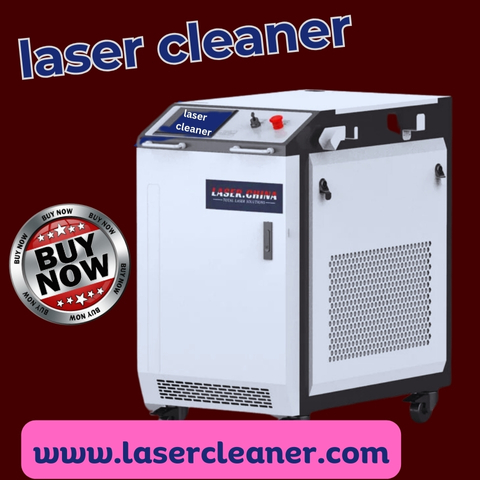
When rust takes over metal for years or even decades, many believe it’s a lost cause. The layers become stubborn, the surface underneath fragile, and the tools once trusted—like sandblasting, chemicals, or grinders—either come up short or cause collateral damage. In such cases, the usual question is: Can anything remove such tough corrosion without harming the base material? The surprising answer is yes—and that’s where a laser cleaner changes the game entirely.
A laser cleaner doesn’t operate like traditional tools. It doesn’t scrape, grind, or burn in the way many abrasive methods do. Instead, it works on the science of light. By directing a concentrated laser beam at the contaminated or corroded area, it precisely targets the unwanted material—like rust, paint, oil, or oxide layers—and vaporizes it without physically touching the surface beneath.
Understanding the Core: How a Laser Cleaner Works
The core mechanism behind a laser cleaner involves a process called laser ablation. This is where short, intense bursts of light energy are focused on the surface layer of a material. When these bursts hit contaminants like rust or paint, they absorb the energy, heat up rapidly, and vaporize into dust and gas. The metal beneath reflects the light rather than absorbing it, which keeps it safe from damage.
This level of precision is what makes laser cleaners incredibly efficient in restoring old machinery, industrial parts, monuments, automotive components, and even aerospace tools.
But it’s not just about the removal power—it’s about control. A laser cleaner can be adjusted for different pulse widths, frequencies, and power levels depending on the sensitivity of the substrate. Whether you’re working on a thick steel beam or a delicate aluminum part, the machine can be dialed in to do exactly what’s needed, no more, no less.
What Makes a Laser Cleaner Reliable for Decades-Old Rust?
To appreciate why laser cleaning stands out, consider what happens during typical rust removal:
-
Sandblasting can erode the base metal.
-
Chemical removers can leave behind residues or cause corrosion.
-
Manual grinding risks surface deformation or over-cleaning.
Now contrast that with a laser cleaner. It doesn’t just remove rust—it targets only the rust. That means even layers built up over decades can be removed cleanly, layer by layer, without exposing the base to friction, heat, or chemicals. And since there’s no contact, there’s no physical pressure. This is particularly vital when restoring antique equipment, preserving historical artifacts, or working on precision machinery where tolerances matter.
Where You See Laser Cleaners Making an Impact
Laser cleaning isn’t a lab experiment—it’s already in action across major industries.
1. Automotive Restoration
Car enthusiasts and restoration experts use laser cleaners to tackle rusted chassis, axles, and exhaust systems without damaging classic car frames. Unlike grinders, lasers don’t scratch, gouge, or alter the shape.
2. Shipbuilding and Marine Maintenance
Boats, submarines, and ships constantly face corrosion from saltwater. Laser cleaning helps in maintaining propellers, hulls, and offshore structures with minimal environmental impact.
3. Military and Defense
In defense applications, laser cleaners are used to maintain tanks, aircraft, and weapon systems where surface precision is critical. You can’t afford a pitted barrel or an uneven armor plate.
4. Oil and Gas Equipment
Heavy-duty pipes, drilling machines, and refineries need frequent decontamination. Laser cleaning ensures no damage to pressure-sensitive systems while removing thick layers of oxidation or buildup.
5. Aerospace
Aircraft maintenance requires absolute precision. Whether it’s a wing panel or an engine part, laser cleaning restores components without affecting material integrity or introducing microfractures.
The Role of Pulse Duration and Frequency
Not all laser cleaners are created equal. Some are built for surface dust and coatings; others are designed for hardcore industrial rust. The secret lies in pulse duration and frequency control.
For delicate tasks, a low-frequency, short-pulse system might be ideal. For tough industrial applications, high-frequency, high-energy pulses are used. This flexibility ensures you’re not just cleaning—you’re customizing the process to suit the material and the situation.
For instance, cleaning rust from a cast-iron pump from the 1950s might require slower pulses to gradually lift each corrosion layer without thermal shock. But removing paint from a modern stainless-steel tank can be done faster with high-energy settings.
Environmental Safety and Cleanliness
A laser cleaner also solves a decades-old industrial headache: waste. Traditional cleaning methods create massive waste—chemicals, dust, water runoff, abrasive residues. Laser cleaning produces little more than a light fume and powdery debris, which can be collected by a vacuum system.
There’s no need for chemical disposal, no secondary clean-up steps, and no airborne pollutants. It’s a dry process, making it ideal for clean rooms, food factories, and industries with strict safety standards.
And because the laser cleaner doesn’t wear down, unlike brushes or sandpaper, there’s no consumable part to replace every few hours. This also means more consistency over time.
Handling Sensitive Surfaces with Confidence
What if you’re dealing with layered contamination? Like rust covered by paint, or grime mixed with oil and scale?
A good laser cleaner doesn’t get confused by complexity. It lifts each layer differently, depending on how it absorbs laser energy. Operators can slow down, change pulse width, or change wavelength to adapt to each challenge. This multi-material adaptability is nearly impossible with traditional tools.
So even if the rust has been there since your grandfather’s days, or the paint’s baked in from years of sun and exposure, laser cleaning can handle it—without needing different machines, tools, or chemicals.
Longevity of the Machine and Operator Ease
Despite the complexity of the technology, operating a laser cleaner doesn’t require a science degree. Modern models are often handheld, ergonomic, and have safety systems built-in. Once set up, they can be operated with simple training, and many come with presets for various materials and contaminants.
Laser cleaners are built for longevity. With minimal moving parts, sealed optics, and efficient cooling systems, these machines are designed to last years with minimal maintenance.
Pricing and Investment Viewpoint
Laser cleaners aren’t cheap—but they’re not meant to be. They’re long-term industrial investments, designed to pay for themselves in operational savings, reduced waste, faster turnaround, and longer equipment life. Businesses that used to spend thousands per year on sandblasting, repainting, or part replacement are now extending the life of their assets instead.
The ROI becomes especially clear in high-volume operations or specialized industries where downtime costs more than equipment.
Final Thoughts
So, back to the tricky question: Is a laser cleaner really powerful enough to remove decades-old rust without damaging the surface?
Absolutely. And not just powerful—but precise, clean, safe, and efficient. What once seemed like irreversible corrosion is now something that can be removed in a matter of minutes without grinding, scraping, or guessing.
The laser cleaner isn’t just another tool—it’s a modern solution to an age-old industrial problem. If you’re dealing with rust, paint, grime, or oxide layers that refuse to budge, it’s time to stop settling for partial fixes and discover how a beam of light can restore what time tried to destroy.