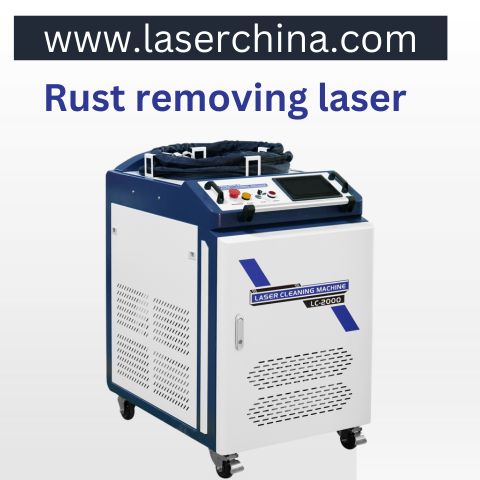
Rust — the age-old enemy of metal — poses a serious threat to the integrity and longevity of tools, vehicles, machinery, and infrastructure. Traditional methods of rust removal, like sandblasting, chemical treatments, or manual grinding, often come with compromises: mess, danger, or surface damage. But there’s a high-tech alternative that’s been gaining momentum across industries: the rust removing laser.
This advanced tool is not just a buzzword in the industrial cleaning world. It represents a shift toward cleaner, more precise, and sustainable practices. So, when the question arises, “Can a rust removing laser really clean metal without damaging its surface or structure?” — the short answer is yes. But let’s dive much deeper into how and why.
Understanding the Rust Removing Laser Technology
A rust removing laser is a type of fiber laser system that emits high-energy pulses of light to interact with the top layer of a surface — in this case, rust. Rust is a product of iron oxidation, a flaky and brittle substance that forms when iron reacts with moisture and oxygen. It bonds to the surface but has different optical and thermal properties than the base metal.
Laser rust removal works by exploiting these differences. The laser’s pulse is tuned to be absorbed by rust but reflected by the underlying metal. This precise targeting means the laser energy vaporizes the rust layer without affecting the base material.
This is not magic. It’s physics, fine-tuned through decades of research and engineering. The rust absorbing the laser’s energy causes it to heat rapidly, break down, and be ejected in the form of micro-particles or plasma. Meanwhile, the metal beneath remains largely unaffected, as it reflects much of the beam.
How Rust Removing Lasers Are Changing Industrial Cleaning
Across industries — from automotive restoration to oil pipelines, from shipyards to precision aerospace tools — rust removing lasers are becoming the go-to solution. They’re fast, clean, and require minimal setup. A technician can point a handheld unit at a rusty surface and watch as the corrosion disappears in real time.
In automotive manufacturing, the restoration of classic cars demands non-abrasive cleaning methods to protect the value of parts. A rust removing laser ensures only the corroded layer is targeted, preserving the stamped metalwork underneath.
In aerospace and defense, where components require stringent tolerance levels and cannot afford structural weakening, lasers offer a way to clean without introducing microfractures or chemical residues.
Behind the Scenes: What Happens When the Laser Hits Rust
When the high-intensity laser pulse hits the rust, it does three things:
-
Absorption: The rust absorbs the energy due to its darker, rougher surface and oxidized composition.
-
Rapid Heating: The localized area reaches temperatures so high that the rust breaks apart at a molecular level.
-
Ablation and Ejection: The rust is turned into gas or fine particles, leaving behind a clean, smooth metal surface.
This controlled process eliminates the chance of pitting or gouging, which is common in abrasive techniques. The pulse duration and power settings can be adjusted to suit various rust thicknesses and metal types.
Industries That Use Rust Removing Lasers
1. Automotive
From factories to restoration garages, rust removing laser machines are now used to clean car chassis, engine components, and old bolts without weakening them.
2. Shipbuilding and Marine
Saltwater exposure accelerates corrosion on boats, ships, and oil rigs. Laser cleaners are deployed to prepare surfaces for repainting or to maintain metal integrity in harsh environments.
3. Railway Maintenance
Train tracks, freight cars, and support structures undergo corrosion due to outdoor exposure. Rust removing lasers simplify maintenance tasks while ensuring long-term reliability.
4. Military and Aerospace
In these sectors, safety and performance are paramount. Lasers allow cleaning of critical equipment, turbine blades, and even electronic components, with no abrasion or chemical risk.
Safety and Operation
Operating a rust removing laser is relatively straightforward. Handheld units come with adjustable parameters and safety interlocks. Technicians wear protective eyewear and often operate the laser in enclosed workspaces with fume extraction systems. Because no chemicals are used, the work area remains cleaner and safer for long-term occupational health.
More advanced models come with automation capabilities, ideal for production lines. Robotic arms can be paired with laser systems to clean parts in high volumes without human fatigue.
Why Rust Removing Lasers Are Trusted for Delicate Jobs
One of the reasons rust removing lasers are so widely adopted is because of their selectivity. Unlike sandpaper or grinders, the laser does not apply mechanical force. Unlike chemicals, it doesn’t seep into cracks or cause secondary reactions. It’s a surgical tool in the world of rust removal.
The beam can be focused down to a millimeter, targeting specific zones or shapes. This is particularly useful when cleaning engraved parts or working around fasteners, where traditional methods might destroy threads or markings.
Moreover, laser cleaning doesn’t change the microstructure of metals. For engineers and quality inspectors, this is vital — the integrity of parts stays intact, allowing them to pass non-destructive testing.
Economic Considerations
While the initial investment in a rust removing laser can be higher than sanders or solvent-based cleaners, it proves cost-effective over time. There are no consumables like sand, brushes, or chemicals. The maintenance is minimal, and the lifespan of the unit is typically long.
Downtime is reduced, cleanup is almost nonexistent, and the safety profile is much higher — fewer accidents mean fewer work interruptions. In regulated industries, the reduction in hazardous waste disposal is another big win.
For businesses that handle metal preparation or restoration frequently, a rust removing laser becomes a tool of efficiency, not just convenience.
Sustainability in Action
Laser cleaning aligns with global trends toward cleaner manufacturing. There are no toxic byproducts, no media blasting dust clouds, and minimal noise pollution. It supports eco-friendly certifications and complies with strict international safety standards.
Many companies are including rust removing lasers in their green transformation strategies, replacing environmentally harmful cleaning methods.
The Future of Laser Rust Removal
Innovation in this field is accelerating. Portable models are getting smaller, software-controlled precision is improving, and new wavelengths are being developed for even more selective cleaning.
Soon, smart lasers with built-in sensors will be able to automatically adjust their intensity based on the type of rust or material being cleaned. This will make them even easier to use by non-specialists.
Researchers are also exploring hybrid tools — combining rust removing lasers with surface coating applicators, allowing simultaneous cleaning and protection.
Final Thoughts
The rust removing laser isn’t just a tool — it’s a revolution in how we approach corrosion. It offers a precise, fast, and clean solution to a problem that’s plagued metals since the dawn of time. As industries grow more concerned with efficiency, safety, and sustainability, this technology fits perfectly into the modern workflow.
Whether restoring a vintage motorcycle, maintaining a fleet of airplanes, or prepping a pipeline in the desert, the rust removing laser is proving its worth every day. It’s not only capable of cleaning metal without damage — it’s redefining what clean really means.