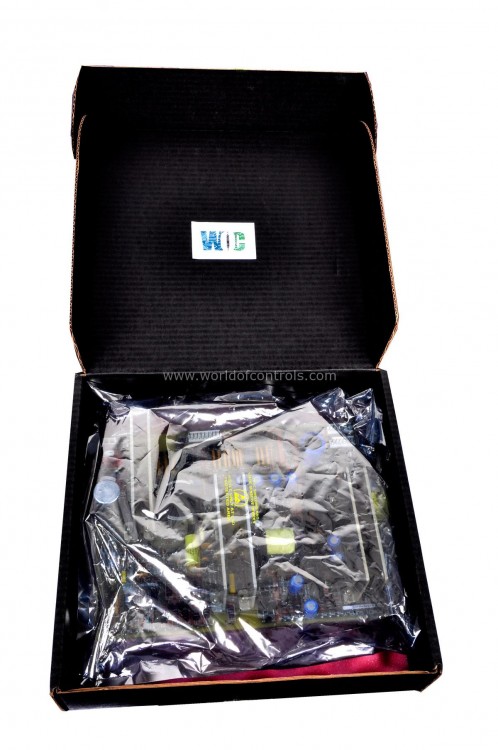
Introduction to GE Industrial Control Systems
GE industrial control systems have been a mainstay in power generation and heavy industrial applications for many years. In gas and steam turbine installations, these systems manage critical functions such as startup sequencing, speed and load control, fuel management, and protective shutdowns. Their long-standing reliability is largely due to a robust combination of specialized hardware and embedded firmware, with Software EPROM sets forming a crucial part of this architecture.
What Is a Software EPROM Set?
A Software Erasable Programmable Read-Only Memory (EPROM) set contains low-level firmware stored directly on a control board. Unlike application-level software that can be easily modified or reconfigured, EPROM firmware is hardware-specific and designed to remain stable throughout extended operating periods. It governs how a board initializes, processes input and output signals, communicates with other system components, and performs real-time control functions.
In turbine control systems, this firmware-level stability is essential for deterministic operation, where timing and response accuracy directly impact safety and performance.
Role of EPROM Firmware in Turbine Applications
Turbines operate under demanding conditions that require precise and reliable control. Software EPROM sets support core system functions, including:
- Board initialization and self-diagnostics during system startup
- Communication between processors, I/O modules, and protection systems
- Interpretation and validation of sensor and actuator signals
- Execution of time-critical control and protection routines
By embedding these functions at the firmware level, EPROM sets ensure fast response times and consistent behavior, even during transient operating conditions.
Importance of Firmware Stability and Compatibility
Each Software EPROM set is developed to match specific hardware designs within GE control platforms. Installing an incorrect or incompatible firmware version can lead to communication errors, improper signal handling, or system faults. For this reason, careful version management is essential during activities such as:
- Control board replacement
- System upgrades or refurbishments
- Troubleshooting operational issues
Maintaining firmware compatibility helps preserve system integrity and prevents unplanned turbine outages.
Lifecycle and Maintenance Considerations
Many GE industrial control systems are now considered legacy platforms, yet they continue to operate reliably in facilities around the world. As these systems age, maintaining correct Software EPROM sets becomes increasingly important. Routine inspections, proper storage of spare firmware components, and accurate system documentation are key to sustaining long-term operation.
In some cases, operators may choose to extend system life through refurbishment or partial modernization. A solid understanding of EPROM functionality allows engineers to evaluate whether existing firmware can continue to meet operational requirements or whether a control system upgrade is warranted.
Significance in the Turbine Industry
In the turbine industry, even brief periods of downtime can have significant economic and operational consequences. Software EPROM sets help mitigate these risks by delivering stable, proven firmware that supports essential control and protection functions. Their predictable behavior contributes to safe turbine operation, regulatory compliance, and consistent power output.
Conclusion
Software EPROM sets are a foundational element of GE industrial control systems, providing the embedded firmware that enables reliable turbine control. By ensuring stable board operation, accurate signal processing, and dependable communication, these firmware components support the long-term performance of critical turbine assets. Understanding their role, compatibility requirements, and lifecycle impact is essential for engineers and operators responsible for maintaining high-reliability industrial control systems.