Procurement Resource, a global leader in market intelligence and cost modeling, is pleased to unveil its latest Soybean Meal Production Cost Report. This extensively researched report offers vital insights for agribusiness firms, animal feed manufacturers, investors, and procurement strategists exploring opportunities in the soybean meal production sector. It provides a thorough cost breakdown, market overview, supply chain evaluation, and technical manufacturing processes to guide profitable and sustainable decision-making.
Soybean Meal: A Critical Ingredient in Global Food and Feed Chains
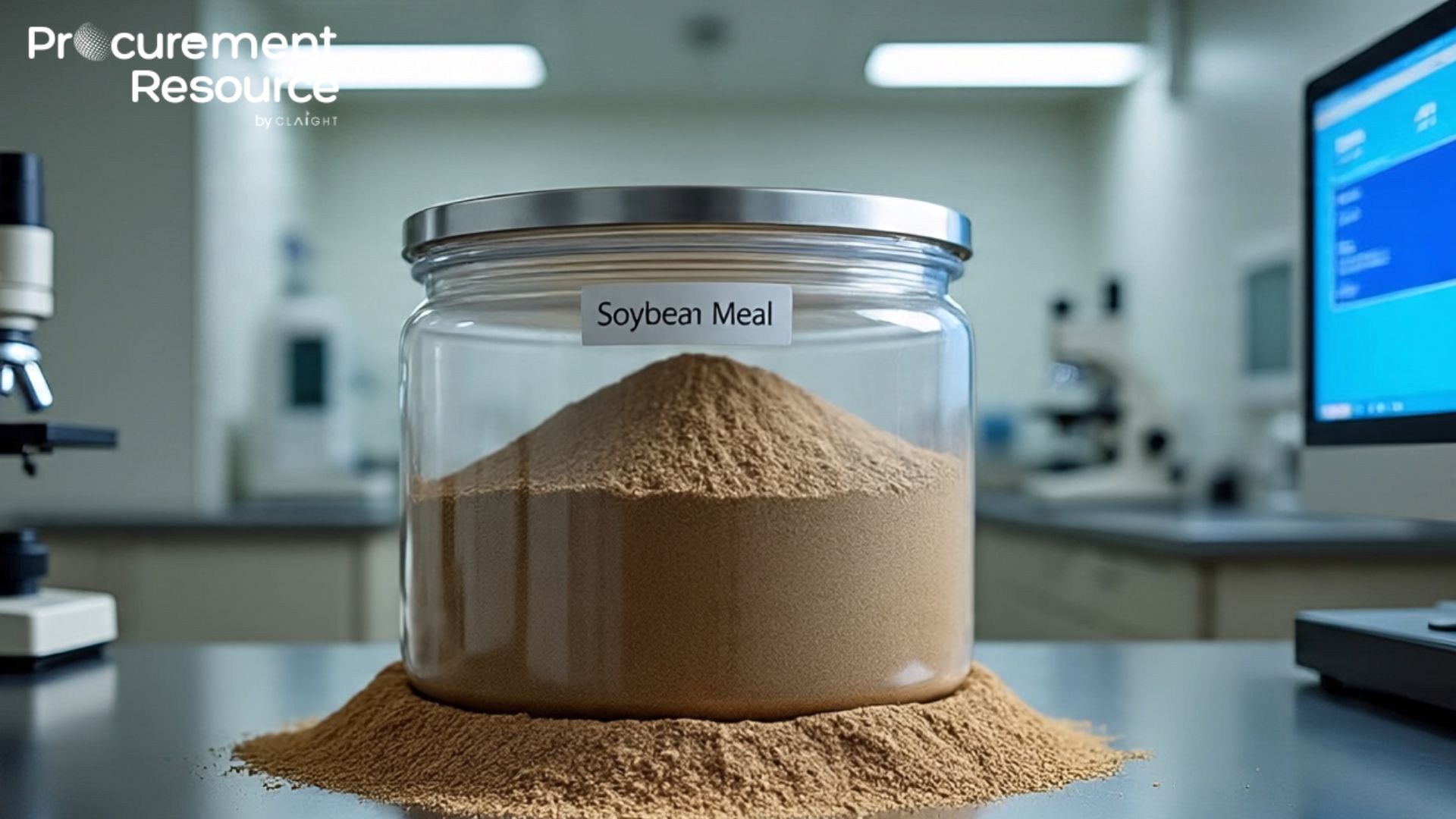
Soybean meal is a high-protein byproduct derived from the extraction of oil from soybeans (Glycine max). After soybean oil is removed through mechanical pressing or solvent extraction, the remaining defatted soybean material is processed into soybean meal, which is rich in protein (typically 44–48%) and widely used as:
- Animal Feed (especially for poultry, swine, cattle, and aquaculture)
- Protein supplement in food products (in limited, regulated applications)
- Fertilizer component (due to its nitrogen content)
As one of the most traded protein meals worldwide, soybean meal plays a pivotal role in ensuring global food security, particularly in countries with intensive livestock industries. With increasing demand for animal protein and sustainable feed sources, the production and consumption of soybean meal are witnessing substantial growth, particularly in regions such as Asia-Pacific, North America, and Latin America.
Exhaustive Production Cost Report: Essential for Strategic Investment
The Soybean Meal Production Cost Report by Procurement Resource delivers detailed technical and financial evaluations to assist stakeholders in planning new facilities, expanding operations, or optimizing procurement. The report covers input costs, utility consumption, equipment needs, labor structure, market dynamics, and pricing trends to provide a robust foundation for commercial planning.
Market Trends and Regional Outlook
Global Demand Dynamics
Key drivers influencing the soybean meal market include:
- Rising global meat consumption, fueling demand for protein-rich animal feed
- Expanding aquaculture industry
- Adoption of plant-based proteins in feed and food segments
- Soybean cultivation expansion in Brazil, the U.S., and Argentina
Dominant Markets
- China – Largest importer due to feedstock needs for pork and poultry
- United States and Brazil – Major producers and exporters
- India and Southeast Asia – Emerging markets with strong consumption growth
Policy & Trade Influences
The report analyzes global trade agreements, export-import tariffs, genetically modified (GM) regulations, and sustainability initiatives that impact the soybean meal market. Particular attention is paid to the role of biofuel policies (which influence soybean oil demand and, consequently, meal supply) and climate regulations affecting crop yields.
Raw Materials and Input Cost Breakdown
Primary Input:
- Whole Soybeans
Other inputs include:
- Hexane or other solvents (for extraction process)
- Steam and water
- Electricity and fuel (for processing and drying)
- Labor and maintenance supplies
The report evaluates soybean prices by region, detailing historical and projected pricing trends. It also accounts for seasonal and geopolitical factors—such as weather patterns, crop forecasts, and trade tensions—that significantly impact input costs.
Production Process Overview
Two Common Methods for Producing Soybean Meal:
1. Mechanical Pressing (Expeller Method)
- Soybeans are cleaned, dehulled, and cracked.
- Flakes are cooked to rupture oil cells and then mechanically pressed to extract oil.
- The remaining solid cake is ground into mechanically extracted soybean meal (typically ~44% protein).
2. Solvent Extraction (Most Common, Industrial Scale)
- Cracked soybeans are conditioned and flaked.
- Oil is removed using hexane solvent in extractor units.
- The resulting “white flakes” are toasted, desolventized, and dried.
- Final product is solvent-extracted soybean meal (higher protein, ~48%).
The report details material flow diagrams, yield metrics (meal per ton of soybeans), and hexane recovery efficiency.
Technology and Equipment Requirements
Depending on the production scale, the required machinery includes:
- Seed Cleaners and Dehullers
- Conditioners and Flaking Mills
- Expellers or Solvent Extractors
- Desolventizer-Toaster (DTDC)
- Dryers and Coolers
- Grinding and Pelleting Equipment
For solvent extraction plants, additional units such as hexane storage tanks, recovery condensers, and fire safety systems are mandatory. The report outlines CAPEX ranges for each setup, tailored for small, medium, and large-scale operations.
Infrastructure and Utility Needs
A typical soybean meal plant also requires:
- Storage Silos for soybeans and finished meal
- Steam Generation Units
- Effluent Treatment Plants (ETPs)
- Electric Substations and Generators
- Fire Safety and Hexane Vapor Recovery Systems
- Logistics Infrastructure (weighbridge, conveyors, truck bays)
The report offers benchmarks for utility consumption, including kWh/ton, steam usage, and water requirements, and highlights energy efficiency strategies to lower long-term operating costs.
Human Resources and Quality Management
Personnel Needs
- Plant Managers and Process Engineers
- Operators and Maintenance Crew
- Quality Control (QC) Staff
- Safety Officers
- Administrative and Supply Chain Personnel
Quality Assurance
To meet global standards for feed and food safety, the report outlines compliance with:
- ISO 22000 / HACCP
- GMP+ Feed Safety Assurance
- AFIA (American Feed Industry Association)
- Codex Alimentarius feed regulations
Analytical testing such as protein content, moisture, residual oil, urease activity, and microbiological safety is covered in the quality protocol.
Financial Overview: CAPEX and OPEX Assessment
Capital Investment (CAPEX)
Investment depends on scale and technology:
- Small Plant (10–20 TPD): $1–3 million
- Medium Plant (50–100 TPD): $5–10 million
- Large Plant (200+ TPD): $15–25 million+
Costs include land, plant construction, machinery, installation, solvent recovery systems, and initial working capital.
Operating Costs (OPEX)
Recurring expenses include:
- Soybean procurement (~80% of cost)
- Hexane and utilities
- Labor and maintenance
- Packaging and transportation
- Regulatory and insurance costs
The report calculates cost per ton of soybean meal, offering sensitivity analysis based on fluctuating soybean prices and plant efficiency.
Profitability Analysis: ROI, Margins & Break-Even
Gross Margin & ROI
Soybean meal enjoys moderate to high margins, depending on oil prices and coproduct value. With strong demand from the feed industry, manufacturers can expect ROI of 15–30% within 2–4 years.
Break-Even and Payback
The break-even point is typically achieved within 2–3 years for solvent-based plants and sooner for smaller expeller plants. The report includes profitability projections under multiple scenarios—domestic sales, export contracts, and integrated crushing (oil + meal) models.
Sustainability and Market Outlook
Environmental and Market Trends
- Shift to non-GMO and organic soybean meal in Europe and niche U.S. markets
- Efforts to reduce carbon footprint of crushing operations
- Growth of sustainable feed certification programs (e.g., RTRS, ProTerra)
- Soybean yield innovations via biotech and agronomic advances
The report provides guidance on carbon tracking, wastewater reuse, and biomass energy integration, helping producers align with global ESG expectations.
Why Choose Procurement Resource?
Procurement Resource is a trusted partner for businesses aiming to navigate volatile commodity markets, plan industrial setups, and benchmark production strategies. Our strengths include:
- Detailed cost modeling and process engineering
- Customizable feasibility studies and plant designs
- Global supplier analysis and procurement support
- Real-time price tracking and forecasting tools
With clients in agribusiness, food processing, and renewable industries, we help organizations optimize operations and scale profitably.
Get Your Free Sample Report
Looking to establish or expand a soybean meal production facility? Our Soybean Meal Production Cost Report provides everything you need—from technical process design to ROI evaluation.
Request a Free Sample Report: https://www.procurementresource.com/production-cost-report-store/soybean-meal/request-sample
Contact Information
Company Name: Procurement Resource
Contact Person: Ashish Sharma (Sales Representative)
Email: sales@procurementresource.com
Location: 30 North Gould Street, Sheridan, WY 82801, USA
Phone:
UK: +44 7537171117
USA: +1 307 363 1045
Asia-Pacific (APAC): +91 1203185500
Connect With Us Online:
https://www.linkedin.com/company/procurement-resource-official/