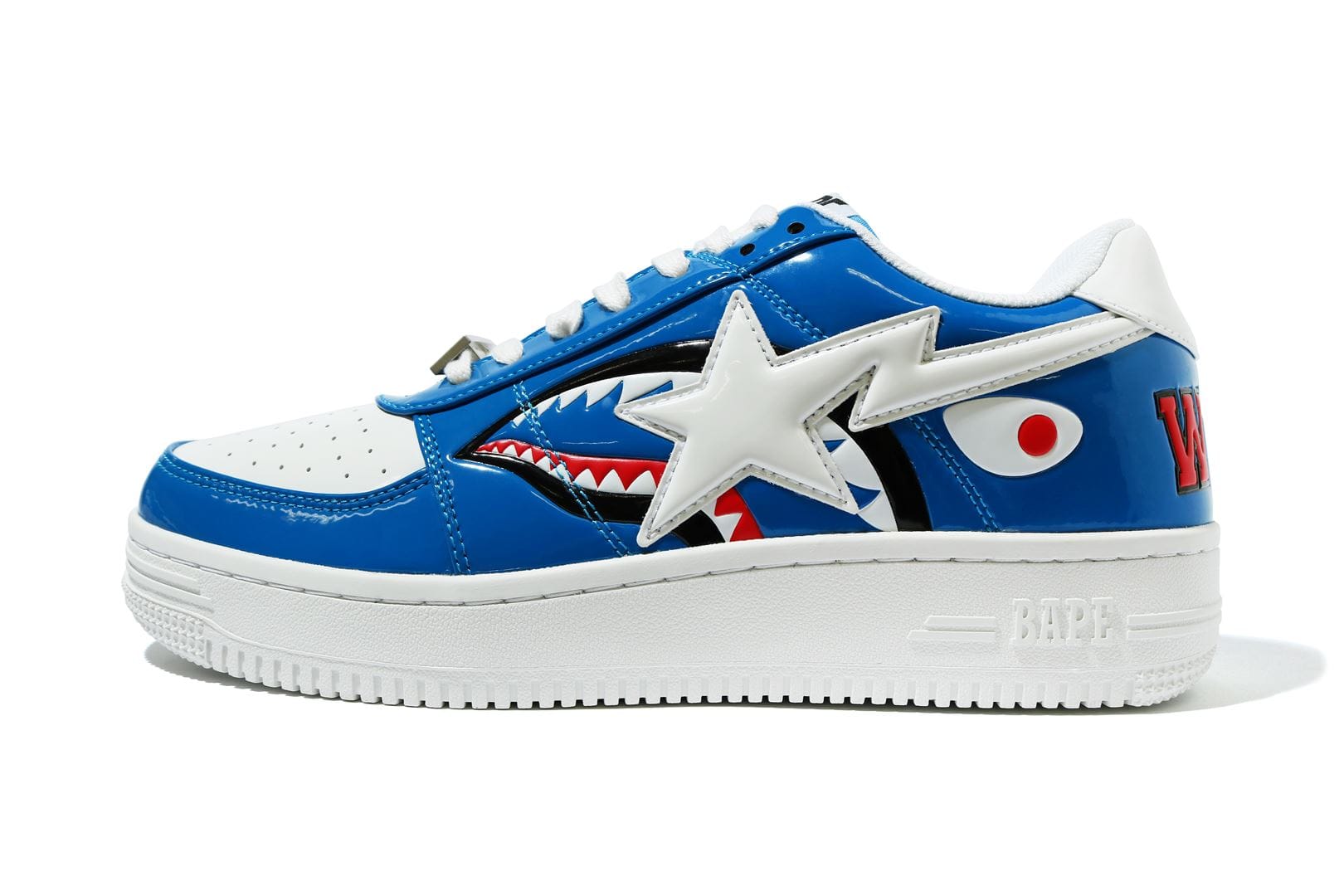
The BAPESTA sneaker has earned its place as a legendary icon in the world of streetwear. Born from the visionary mind of Nigo, the founder of A Bathing Ape (BAPE), this sneaker became a cultural symbol during the early 2000s. Inspired heavily by the Nike Air Force 1 silhouette, the BAPESTA transformed sneaker culture by infusing Japanese flair, bold graphics, and exclusive drops into a classic American frame. Over the years, it has grown beyond being a footwear trend and evolved into a collectible fashion statement for sneaker enthusiasts and hypebeasts alike.
Origins and Evolution of the BAPESTA Sneaker
Introduced in the early 2000s, the BAPESTA debuted during a golden era of fashion crossovers and music influence. Nigo took the Air Force 1 design and added his signature twist, replacing the iconic Nike Swoosh with a lightning bolt motif and incorporating vibrant patent leather colorways. Each pair exuded uniqueness, reflecting the street-centric aesthetic of Tokyo’s Harajuku district, where BAPE first established its roots. The sneaker’s name, BAPESTA, is derived from the brand’s acronym and the Japanese obsession with stars, pop culture, and bold visuals.
As the sneaker grew in popularity, it became a canvas for high-profile collaborations, helping BAPE cement its presence globally. From hip-hop legends like Pharrell Williams and Kanye West to designer collaborations with Marvel and Comme des Garçons, the BAPESTA quickly gained momentum across continents. Its exclusivity and limited releases only heightened its desirability in the sneakerhead community.
Cultural Impact in Music and Fashion
One cannot separate the BAPESTA from its cultural influence in the music world. The sneaker became synonymous with hip-hop and rap culture, particularly in the United States. Kanye West’s early appearances in BAPESTAs, coupled with his collaboration on a College Dropout-themed pair, elevated the sneaker’s visibility in the West. At the same time, Pharrell Williams played a pivotal role in integrating BAPE aesthetics into mainstream fashion through his Billionaire Boys Club venture, co-founded with Nigo.
The sneaker’s flashy finishes, use of patent leather, and colorful themes resonated with the louder, experimental style of mid-2000s hip-hop. BAPESTAs became part of the fashion uniform among artists and fans alike, contributing to a shift in how streetwear brands collaborated with musicians and influenced fashion trends.
Design Philosophy and Visual Identity
BAPESTA sneakers are known for their fearless use of color, graphics, and materials. From candy-like patent leathers in bright green, red, and blue to camo-printed silhouettes and glow-in-the-dark editions, each design offers a unique story. Unlike traditional sneakers that followed subtle tones and minimalism, BAPESTA embraced maximalism. Its star logo, known as the “STA,” instantly became a recognizable symbol of boldness and creativity.
Each pair of BAPESTA sneakers tells a visual story. Many designs feature mismatched colors on the left and right shoes, reflective panels, or cartoon elements from Japanese pop culture. These daring designs contributed to the sneaker’s appeal among youth and collectors. The sneaker’s midsole and outsole design also closely mimic the Air Force 1, but with slight tweaks that cater to comfort, durability, and identity.
Limited Edition Collaborations and Exclusivity
What sets the BAPESTA apart in the sneaker world is its approach to collaborations and limited edition releases. Unlike mass-market models, BAPESTA drops were often region-specific, seasonal, or themed around major pop culture events. Collaborations with global brands like Coca-Cola, Disney, and even luxury designers added new layers to the BAPESTA’s story.
These limited releases often sold out within minutes, generating buzz across fashion forums and social media platforms. The exclusivity created a resale culture around BAPESTAs, with some pairs fetching thousands of dollars on the aftermarket. This sense of rarity and prestige elevated the sneaker’s status as more than just footwear—it became a collectible piece of fashion history.
The Role of BAPESTA in Modern Streetwear
As fashion cycles evolve, the BAPESTA has maintained its relevance through reissues and reinventions. In recent years, BAPE has relaunched the BAPESTA with updated materials, construction techniques, and more sustainable practices. The sneaker’s return has been met with nostalgia from older fans and curiosity from a new generation discovering the brand.
In a fashion era where authenticity, heritage, and storytelling matter more than ever, the BAPESTA continues to resonate. Its fusion of street culture, music, and bold aesthetics offers something truly unique in a saturated sneaker market. Many contemporary streetwear brands still follow the blueprint BAPE created—merging limited supply, pop culture collaboration, and strong visual branding.
BAPESTA’s Global Influence and Collector Culture
The BAPESTA isn’t just popular in Japan or the United States—it has a global footprint. In countries like South Korea, China, and the UK, BAPESTA is revered by fashion-forward youth and collectors. Sneaker conventions, digital auctions, and archive museums often display rare BAPESTA pairs as highlights of streetwear history.
Collectors cherish the BAPESTA not only for its aesthetics but also for its storytelling power. Each drop represents a moment in cultural history, whether tied to an album release, an anime crossover, or a significant fashion week. Owning a BAPESTA pair is akin to owning a piece of a generation’s artistic movement.
Future of BAPESTA in Fashion and Sneaker Culture
As we move into a more digitally driven fashion industry, the BAPESTA is poised to continue its legacy through smart innovation and brand collaborations. With the rise of digital fashion, NFT sneakers, and augmented reality campaigns, BAPE could leverage its iconic status to reimagine the BAPESTA experience.
Furthermore, collaborations with upcoming designers, influencers, and brands from emerging markets will likely push the sneaker into new territories. BAPE’s strategy of reinventing classic models while maintaining brand heritage ensures the BAPESTA stays relevant in a competitive market.
Conclusion: Why BAPESTA Remains an Iconic Symbol
The BAPESTA remains more than just a sneaker—it is a symbol of cultural fusion, fearless fashion, and global streetwear evolution. From its bold beginnings inspired by the Air Force 1 to its vibrant collaborations with music and art, the BAPESTA has left an indelible mark on fashion. Its ability to bridge the gap between East and West, classic and contemporary, luxury and street, makes it a timeless staple in the world of style.