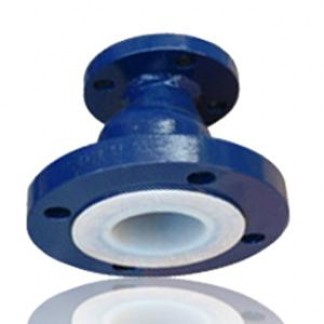
Industrial piping systems are often exposed to harsh operating conditions such as high temperatures, aggressive chemicals, and abrasive fluids. In such environments, standard fittings may fail due to corrosion or chemical attack. To overcome this challenge, industries rely on PTFE lined fittings, particularly PTFE lined concentric reducers.
These reducers are not just connectors; they play a vital role in flow management, process safety, and system efficiency. In this blog, we will cover everything you need to know about PTFE lined concentric reducers, including their design, working, properties, benefits, and industrial applications.
What is a PTFE Lined Concentric Reducer?
A concentric reducer is a pipe fitting used to connect two pipes of different diameters while keeping their centerlines aligned. When this reducer is lined with PTFE (Polytetrafluoroethylene), it gains superior chemical resistance and non-stick properties.
The outer shell, usually made of carbon steel or stainless steel, provides mechanical strength, while the PTFE lining shields the reducer from corrosion and contamination. The result is a durable, leak-proof, and highly reliable fitting for demanding industries.
Design and Structure
-
Outer Body: Fabricated from carbon steel, stainless steel, or ductile iron.
-
Inner Lining: Virgin PTFE lining is applied through molding or extrusion.
-
End Connections: Usually flanged as per ANSI, DIN, or JIS standards.
-
Dimensions: Available in standard sizes ranging from 25 mm to 600 mm, with custom options on request.
-
Shape: Conical design ensuring smooth and balanced flow transition.
This combination of robust construction and PTFE lining ensures excellent resistance to wear, corrosion, and chemical degradation.
Key Characteristics of PTFE Lined Concentric Reducer
-
Chemical Inertness – Resistant to almost all acids, bases, and solvents.
-
High Thermal Stability – Works efficiently from -40°C to +200°C.
-
Non-Adhesive Properties – Prevents scaling and material build-up inside the reducer.
-
Dimensional Precision – Manufactured to global standards for easy compatibility.
-
Long Service Life – Withstands years of continuous operation in tough environments.
How PTFE Lined Concentric Reducers Work
When installed between two pipes of different sizes, the PTFE lined concentric reducer:
-
Maintains the same centerline, ensuring smooth and even fluid flow.
-
Minimizes turbulence and pressure drop, leading to better pump efficiency.
-
Provides a non-reactive inner surface, protecting the system from contamination.
-
Ensures leak-proof sealing when used with compatible PTFE gaskets and bolts.
This makes them suitable for both liquid and gaseous media, even in highly corrosive or hazardous environments.
Benefits of Using PTFE Lined Concentric Reducer
-
Corrosion Protection
-
Ideal for aggressive chemicals like hydrochloric acid, sulfuric acid, chlorine, and caustic soda.
-
-
Safety Assurance
-
Leak-proof design ensures safe handling of hazardous chemicals.
-
-
Operational Efficiency
-
Smooth bore reduces energy loss, lowering operational costs.
-
-
Low Maintenance
-
PTFE’s non-stick surface eliminates frequent cleaning needs.
-
-
Cost Savings
-
Though initial investment is higher, it reduces downtime, replacements, and overall maintenance costs.
-
-
Versatility
-
Compatible with various pipe systems in chemical, food, pharmaceutical, and power industries.
-
Applications of PTFE Lined Concentric Reducer
These reducers are widely used in industries where corrosion resistance, safety, and durability are crucial:
-
Chemical Industry: Transfers corrosive fluids and gases safely.
-
Pharmaceutical Industry: Maintains purity in sensitive chemical processing.
-
Food and Beverage Industry: Prevents contamination in hygienic environments.
-
Petrochemicals: Handles aggressive hydrocarbons and solvents.
-
Water Treatment Plants: Resistant to chlorine and strong disinfectants.
-
Power Plants: Used in cooling systems and chemical feed lines.
-
Paper & Pulp Industry: Handles bleaching agents and acidic chemicals.
PTFE Lined Concentric Reducer vs. Traditional Reducers
| Aspect | PTFE Lined Reducer | Traditional Metal Reducer |
|---|---|---|
| Corrosion Resistance | Excellent | Limited |
| Maintenance | Minimal | Frequent |
| Service Life | Long | Short in corrosive conditions |
| Safety | Leak-proof, chemical resistant | Risk of leakage/corrosion |
| Cost | Higher initial, lower long-term | Lower initial, higher long-term |
This comparison highlights why industries handling corrosive or hazardous media prefer PTFE lined fittings.
Standards and Testing
To guarantee quality and reliability, PTFE lined concentric reducers undergo several tests:
-
Hydrostatic Testing for pressure resistance
-
Spark Testing for lining integrity
-
Dimensional Checks as per ANSI/DIN standards
-
Visual Inspection for cracks, damage, or surface defects
These fittings are often certified as per ASTM, DIN, ISO, and NACE requirements.
Installation Guidelines
For best performance, proper installation is crucial:
-
Inspect the reducer for cracks or lining damage before installation.
-
Use only PTFE-compatible gaskets for sealing.
-
Avoid over-tightening bolts to protect the PTFE lining.
-
Maintain pipe alignment to prevent mechanical stress.
-
Periodically inspect for wear and replace if damaged.
Following these practices ensures leak-free operation and long service life.
Why Choose PTFE Lined Concentric Reducer?
-
Reliable performance in corrosive applications
-
Extended equipment life and reduced replacement frequency
-
Improved process safety with leak-proof fittings
-
Compliance with global standards
-
Suitable for diverse industries from chemical to food processing
Investing in high-quality PTFE lined reducers not only improves system efficiency but also ensures long-term operational safety.
Conclusion
The PTFE lined concentric reducer is a vital fitting that combines the strength of metal with the unmatched chemical resistance of PTFE. By ensuring smooth flow transition between pipes of different diameters, it enhances system performance while protecting against corrosion and contamination.
From chemical plants to pharmaceutical industries, these reducers are indispensable for safe, reliable, and efficient fluid handling. For industries seeking durability, safety, and cost efficiency, PTFE lined concentric reducers remain the ideal choice.