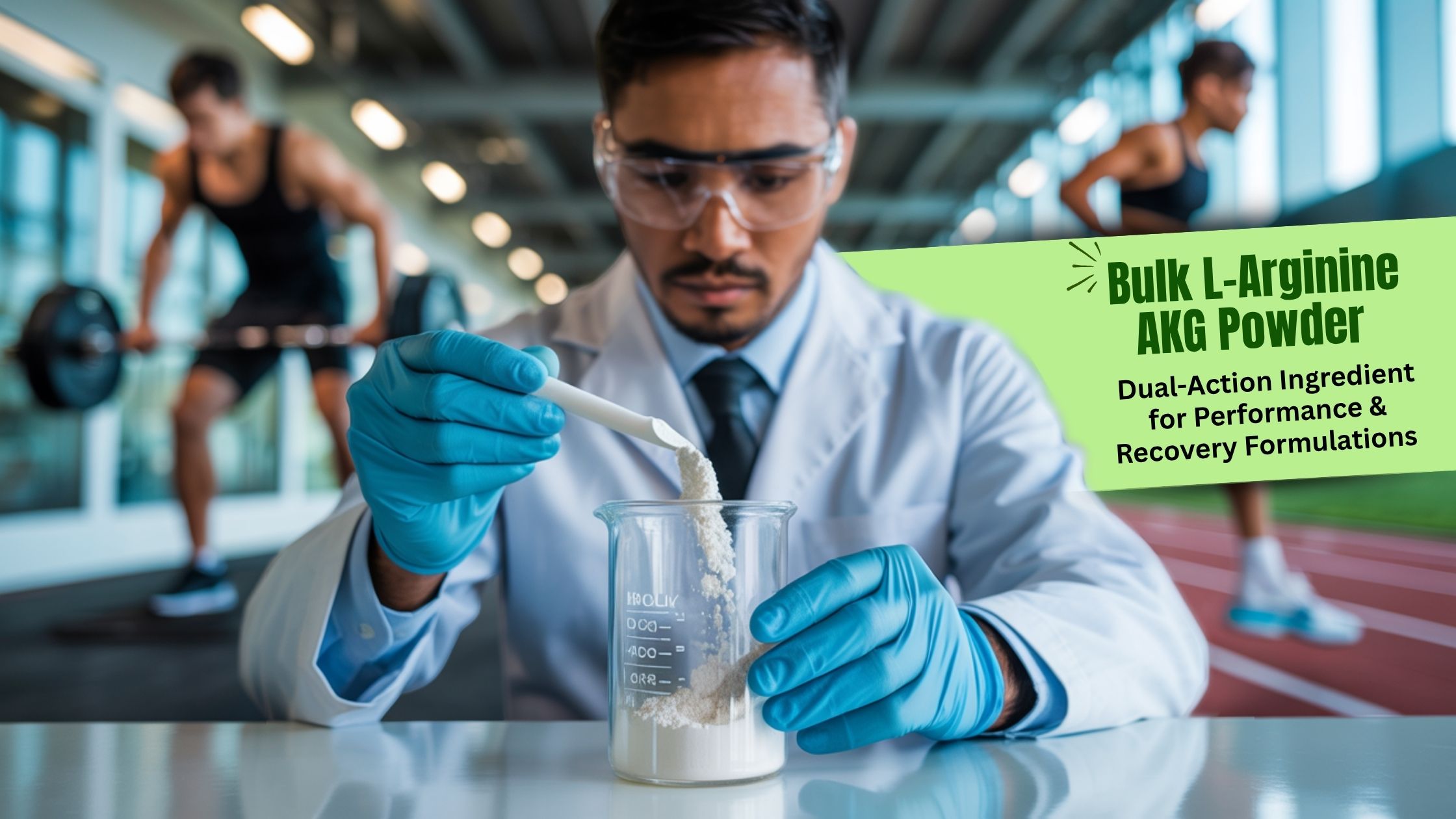
I’ve been watching ingredient trends long enough to know that some compounds fade as quickly as they rise, but L-Arginine Alpha-Ketoglutarate (AAKG) isn’t one of them. As of mid-2025, it continues to hold its ground—and, in fact, expand—across multiple sectors in the U.S. industrial ingredient space. If you’re formulating for performance, circulation, or metabolic support, chances are AAKG is already on your radar or should be.
Let’s break down what’s happening right now in the U.S. market, what makes AAKG so formulation-friendly, and what industrial buyers like us need to consider when sourcing it in bulk.
What Is AAKG, and Why Do Manufacturers Use It?
Chemically speaking, AAKG is a salt made by combining L-arginine—an amino acid known for its nitric oxide boosting potential—with alpha-ketoglutaric acid, a key compound in the body’s Krebs (energy) cycle. This combo isn’t just about convenience. It’s about synergy.
Together, they support nitric oxide production, cellular energy metabolism, and muscle recovery pathways. For sports nutrition brands, that means better blood flow, better pumps, and potentially faster recovery times. For pharmaceutical and nutraceutical developers, it means another amino-acid-based tool to build cardiovascular and metabolic support formulas around.
And here’s what makes AAKG stand out on the production side: it’s highly compatible with powdered blends, capsule filling, and liquid delivery systems. Its stability and solubility make it easy to work with, especially in large-scale manufacturing.
The Industrial Sectors Driving Demand
While AAKG is still best known in sports nutrition—especially in pre-workout blends—the scope is widening. In the last six months alone, I’ve seen increased R&D interest from companies in cardiovascular health, healthy aging, and even veterinary nutrition.
- Nutraceuticals and pharma are using AAKG in capsules targeting blood flow and energy metabolism.
- Food and beverage players are starting to test its integration into functional drink mixes.
- Animal health supplement companies (a niche but growing segment) are evaluating it for livestock performance products.
And in most of these cases, the reason AAKG gets chosen is clear. It delivers dual functionality with relatively low formulation friction.

What Bulk Buyers Should Know Right Now
From a sourcing perspective, the U.S. market has seen stable-to-rising demand in the first half of 2025. Based on trade and sourcing updates I’ve reviewed, minimum order quantities (MOQs) for AAKG powder usually start around 25kg. The average landed cost ranges between $10 to $30 per kg, depending on the grade and whether you’re sourcing domestically or importing.
One shift I’ve noticed so far. U.S.-based buyers are more cautious about documentation than ever before. If you’re buying in bulk, don’t move forward without:
- A Certificate of Analysis (COA) batch-specific to your order.
- GMP and ISO compliance documentation from the facility.
- FDA-registered manufacturing confirmation if you’re formulating for regulated categories.
Domestic sourcing is more convenient in terms of speed and compliance transparency, but some international suppliers are starting to close the documentation gap. Still, plan lead times carefully, especially if you’re importing. Ocean freight delays are still a factor.
Formulation Tips: What Works, What Doesn’t
AAKG works particularly well in powdered pre-workouts, which is where most formulators begin. But I’ve seen some interesting developments in liquid-ready formats and encapsulated time-release tablets that combine AAKG with other amino acids or cofactors.
If you’re experimenting, consider pairing AAKG with:
- Citrulline malate for synergistic nitric oxide support.
- Creatine or beta-alanine in muscle-focused stacks.
- Electrolytes in hydration and endurance blends.
One word of caution: while AAKG supports energy metabolism, don’t position it as a direct energy stimulant. It doesn’t work like caffeine and that’s a good thing. The appeal lies in steady support, not spikes.
Market Growth: Still a Smart Bet?
Absolutely. Based on verified market reports from 2025, the global L-arginine market is projected to grow at a CAGR of 9–14% through 2030. North America is a major driver, responsible for over 24% of global demand. AAKG, as a premium derivative, is piggybacking on this momentum.
What’s interesting is the shift in use cases. Fitness still dominates, but the door is opening for broader wellness applications, especially those tied to aging, circulation, and recovery. That makes AAKG a good candidate for brands looking to diversify or reposition existing lines.
Final Thoughts
In an industry where ingredients rise and fall with consumer trends, AAKG has earned its place through solid biochemistry and practical formulation benefits. As a buyer, I look for ingredients that serve both marketing narratives and manufacturing realities and AAKG continues to do both.
Whether you’re scaling up a sports supplement line or exploring more advanced cardiovascular or metabolic formulas, AAKG is one of those rare ingredients that checks the boxes for science, stability, and supply chain viability.
If it’s not already in your formulation pipeline, it might be time to reconsider.